The U.S. Army Corps of Engineers says construction of the Savannah Harbor Expansion Project was completed in 2025. The federal navigation channel is now 47 feet below mean lower low water, compared with 42 feet before the project, and post-construction environmental monitoring continues. In fiscal 2026, the Port of Savannah handled 5.67 million twenty-foot-equivalent units. That volume shows scale, but it does not guarantee low cost, available equipment, rail capacity, or export space for an individual farm or shipper.
Source verification updated October 1, 2026. Port volumes, vessel schedules, tariffs, free time, terminal rules, rail service, refrigerated equipment, and agricultural restrictions change. Confirm a shipment with the carrier, terminal, broker, and relevant inspection agency.
1. What SHEP completed—and what it did not
The Savannah Harbor Expansion Project deepened the federal navigation channel from 42 to 47 feet below mean lower low water. The project also widened selected bends, enlarged the Kings Island turning basin, and included environmental-mitigation features. Its purpose was to let larger or more heavily loaded vessels move with fewer tidal restrictions—not to make every ship independent of tide, berth availability, weather, pilotage, or cargo constraints.
The Corps now labels SHEP construction complete and the project in a multi-year post-construction environmental-monitoring phase. It also warns readers not to confuse SHEP with a separate 2026 harbor-deepening study led by the Georgia Ports Authority. A study is not another completed deepening project. Future depth, cost, authorization, environmental review, and funding must be reported separately.
The old article combined SHEP with billions of dollars in unrelated or future terminal investment. GPA currently describes a $5 billion infrastructure program over the next decade. That is a forward capital plan across port assets, not proof that $4.5 billion of robotics and inland hubs has already been installed for Savannah agriculture.
2. Fiscal 2026 volume provides a measured baseline
GPA reported 5.67 million TEUs across Savannah docks in fiscal year 2026, just below 5.7 million in the prior fiscal year. June 2026 volume was 483,684 TEUs, 18 percent above June 2025. A single monthly increase should not be presented as the port’s permanent growth rate, and total TEUs combine imports, exports, loaded boxes, and empties according to the authority’s reporting methods.
Garden City Terminal covers 1,345 acres and is described by GPA as North America’s largest single-operator container facility. “Largest terminal” is different from “second-busiest East Coast export gateway,” “fastest port,” or “lowest dwell time.” Rankings depend on whether the measure is total TEUs, loaded exports, port complex, terminal footprint, rail dwell, truck turn, or reporting period. Professional reporting names the measure and year.
| System | Verified 2026 or current record | Do not infer |
|---|---|---|
| Savannah harbor channel | 47 feet MLLW; SHEP construction complete in 2025 | Every vessel can sail fully loaded at every tide |
| Port volume | 5.67 million TEUs in FY2026 | Guaranteed capacity or price for one exporter |
| Mason Mega Rail | 2 million TEU annual lift capacity; 541,405 containers moved by rail in FY2026 | Capacity equals actual utilization |
| Rail share | 17 percent of Savannah container trade in FY2026 | Most port cargo bypasses trucks |
| Refrigerated plugs | 3,024 rack plugs plus 222 wheeled plugs on GPA’s current page | 3,500 “reefer racks” or automatic box availability |
| Gainesville Inland Port | Opened in May 2026, according to GPA | Every farm or processor has direct on-site rail service |
3. Mason Mega Rail adds capacity, not a truck-free port
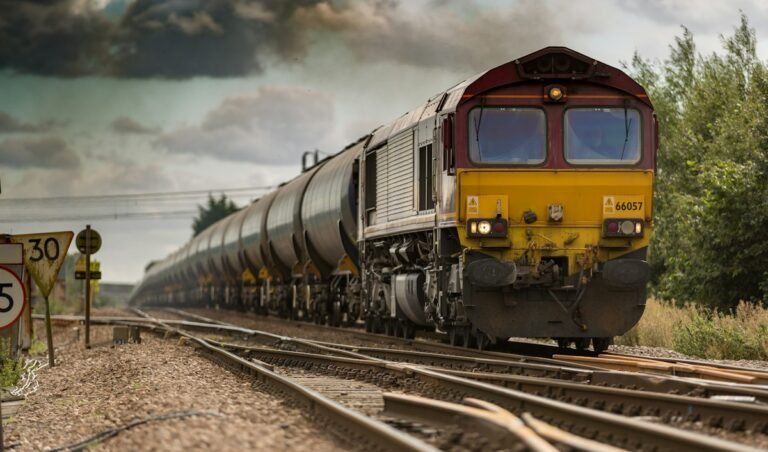
Mason Mega Rail occupies 85 acres at Garden City Terminal. GPA says it has 18 working tracks, can handle ten 10,000-foot trains, provides CSX and Norfolk Southern service, and has annual rail-lift capacity of 2 million TEUs. The authority reported 541,405 containers moved by rail in fiscal 2026. Rail cargo was 17 percent of Savannah’s container trade, so most container traffic still moved by truck.
This distinction corrects two misleading claims in the former article. First, 2 million TEUs is designed capacity, not current annual rail volume. Second, a modeled or projected reduction in long-haul truck trips is not the same as 350,000 truck trips measured and eliminated every year. Rail can reduce highway miles for suitable lanes, but boxes still need origin, destination, drayage, warehousing, chassis, and schedule coordination.
4. Inland ports serve defined markets and phases
The Appalachian Regional Port in Murray County connects northwest Georgia to Savannah by rail. GPA reported a record 49,319 intermodal containers there in fiscal 2026, up 20 percent from the prior year. The Gainesville Inland Port—a $134 million project serving northeast Georgia—opened in May 2026 after commissioning all-electric rubber-tired gantry cranes and its Norfolk Southern connection.
These facilities can shorten selected truck routes and help customers reposition containers, but “Network Georgia” is not a universal farm-to-ship conveyor. A shipper must verify commodity acceptance, rail cutoffs, container supply, weight limits, customs and agriculture procedures, refrigeration, drayage availability, and the total landed cost. South Georgia producers may not be geographically served by a north Georgia inland terminal.
The previous version described the Gainesville facility as fully operating without a dated status and suggested customs clearance was available at every inland port. That language has been removed. Project pages now distinguish the Appalachian facility’s measured activity from Gainesville’s May 2026 opening.
5. Agriculture is large, but the correct number depends on the measure
The University of Georgia’s 2026 Agriculture Impact Report uses 2024 data. It places statewide farm-gate value at $18.03 billion. Food and fiber production plus related industries supported an estimated 370,400 jobs and contributed $100.4 billion to statewide economic output. The former article’s unsourced “$74 billion agricultural industry” mixed incompatible concepts.
Broilers led the farm-gate ranking at $6.1 billion, followed by beef and eggs; peanuts were $877.9 million, timber $655.6 million, and blueberries $382.7 million. These production values do not equal port exports. Domestic sales, processing, inventory, commodity classifications, trade restrictions, and other ports all affect what ultimately moves through Savannah.
Refrigerated logistics are important for poultry, produce, and other perishables. GPA’s current page lists 3,024 reefer-rack plugs and 222 wheeled plugs, not more than 3,500 racks. Electrical plugs are only one part of a cold chain: exporters also need pre-cooling, sanitary controls, inspection eligibility, gensets or monitored power during inland moves, carrier equipment, and documented temperature handoffs.

6. Environmental mitigation is still being tested
Harbor deepening changes salinity, dissolved oxygen, flow, wetlands, and habitat. SHEP mitigation includes two dissolved-oxygen injection facilities, freshwater-flow rerouting, preservation of 2,245 acres of freshwater wetlands, a raw-water storage feature, cultural-resource recovery, and fish-passage work. The Corps says post-construction monitoring is active.
That monitoring phase is material. Installation of a mitigation system is not proof that every ecological outcome has been achieved permanently. A responsible assessment follows dissolved oxygen, salinity, wetland response, sturgeon and other indicator species, raw-water performance, and any adaptive-management requirement across the published monitoring period.
Port growth also creates impacts outside the navigation channel: truck emissions, noise, roadway safety, warehouse land conversion, stormwater, and housing pressure. Terminal electrification and rail can reduce some emissions, but benefits should be supported by equipment inventories, energy use, duty cycles, and measured changes rather than broad “green port” labels.
7. Export checklist for farms and processors
- Define the trade lane. Confirm destination, service, transshipment, sailing frequency, cutoff, transit time, and seasonal risk with the carrier.
- Check product admissibility. Identify USDA, FDA, Customs, foreign-country, treatment, labeling, cold-chain, and certificate requirements before booking.
- Price the full move. Include inland haul, chassis, fuel, rail, terminal handling, inspection, refrigeration, documentation, detention, demurrage, and insurance.
- Reserve equipment. A published number of reefer plugs does not guarantee an empty container, genset, chassis, or vessel slot.
- Use the appropriate inland gateway. Compare direct trucking with Appalachian or Gainesville rail using current schedules and total round-trip miles.
- Record handoffs. Keep seal, temperature, inspection, gate, rail, terminal, and bill-of-lading events for claims and traceability.
Savannah is a large, growing gateway with a completed 47-foot harbor project, major on-terminal rail capacity, and expanding inland connections. The accurate 2026 story is operational rather than promotional: 5.67 million TEUs, a 17-percent rail share, a newly opened Gainesville facility, measurable reefer infrastructure, and continuing environmental monitoring. Those facts help shippers plan; superlatives and guaranteed efficiency do not.
Related source-verified reporting examines Illinois freight and hydrogen planning and Ohio semiconductor infrastructure and public-risk milestones.
Primary official sources
- U.S. Army Corps of Engineers: SHEP completion and monitoring status
- Georgia Ports Authority: fiscal 2026 volume, rail share, and inland-port activity
- Georgia Ports Authority: Garden City Terminal facilities and services
- Georgia Ports Authority: Mason Mega Rail design and capacity
- Georgia Ports Authority: Gainesville Inland Port project and commissioning status
- Georgia Ports Authority: current refrigerated-cargo infrastructure
- University of Georgia: 2026 Agriculture Impact Report using 2024 production data
- U.S. Army Corps of Engineers: SHEP environmental impact statement