CEDAR RAPIDS – Agricultural marketing cooperatives and Class I transcontinental railroads across the Midwest have completed multi-million-dollar expansions of 110-car unit-train rapid loadout balloon loop tracks, enabling massive 440,000-bushel grain trains to be filled continuously in under eight hours and dramatically lowering ocean export basis costs for American grain producers.
Statutory Framework and Regulatory Context
- Statutory Factor: United States Warehouse Act (7 U.S.C. 241 et seq.) licensing and grain storage regulations.
- Statutory Factor: Surface Transportation Board rail agricultural freight rate and demurrage guidelines.
- Statutory Factor: Federal Railroad Administration track safety rules for industrial switching balloon loops.
- Statutory Factor: Department of Agriculture Agricultural Marketing Service Federal Grain Inspection Service rules.
The Geometry of Continuous Balloon Loop Tracks Versus Ladder Yards
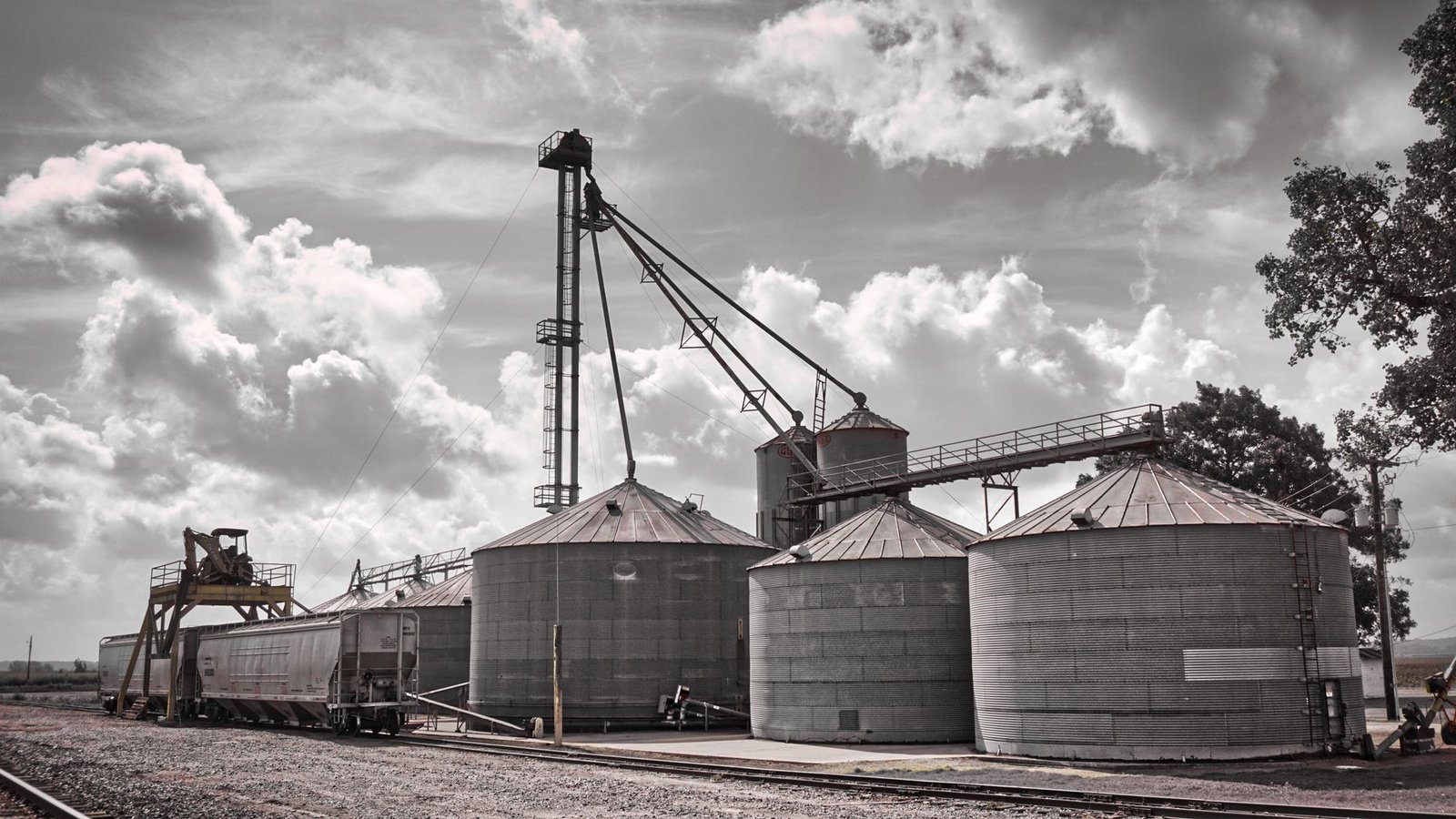
Historic country grain elevators constructed along Midwestern rail lines operated on small ‘ladder’ or spur tracks capable of holding only 15 to 25 railcars at a time. Loading a full train required local railroad switching crews to spend hours uncoupling cars, moving cuts back and forth across public highway crossings, and repeatedly blocking traffic, a slow, labor-intensive process that frequently took three days to assemble a single train.
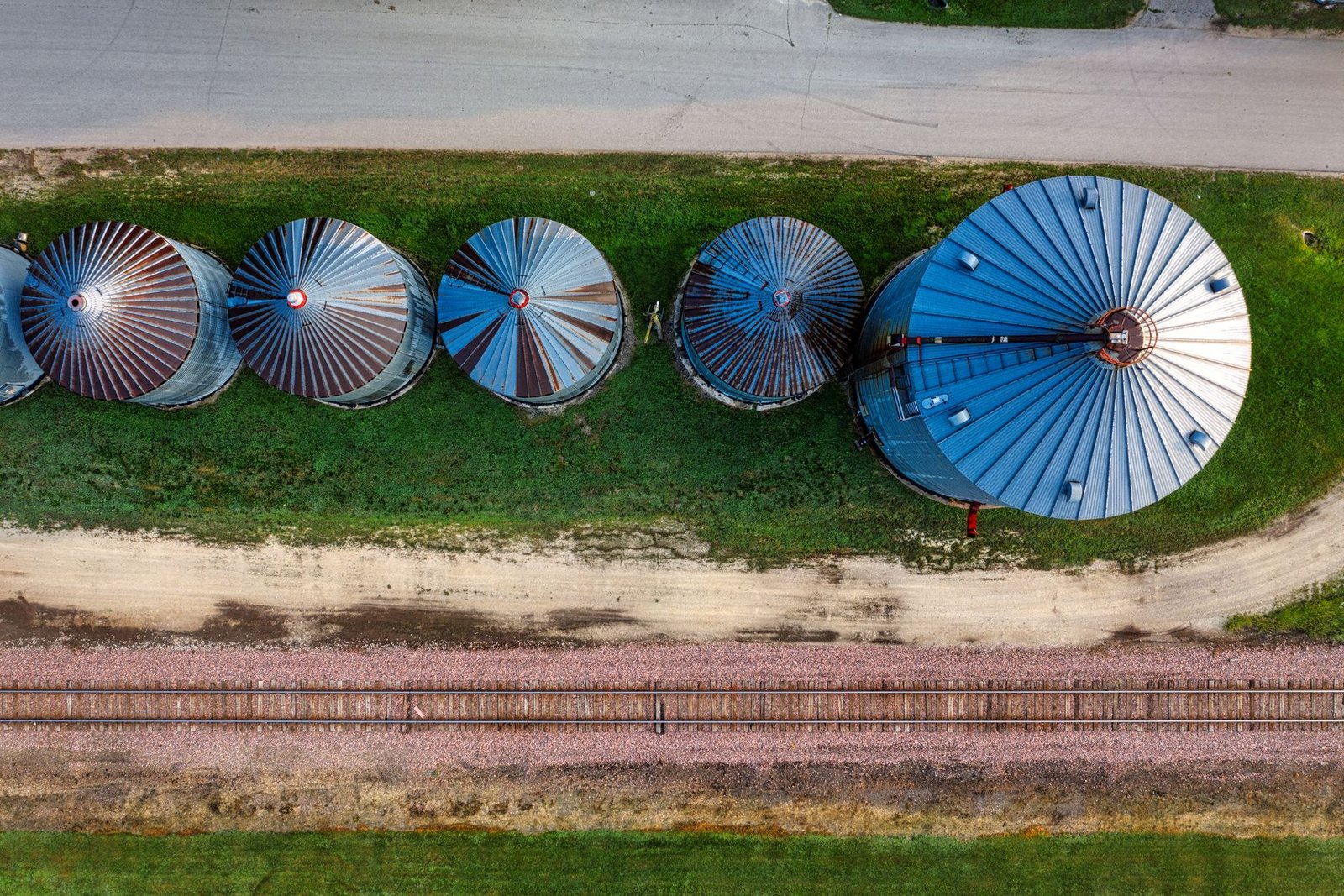
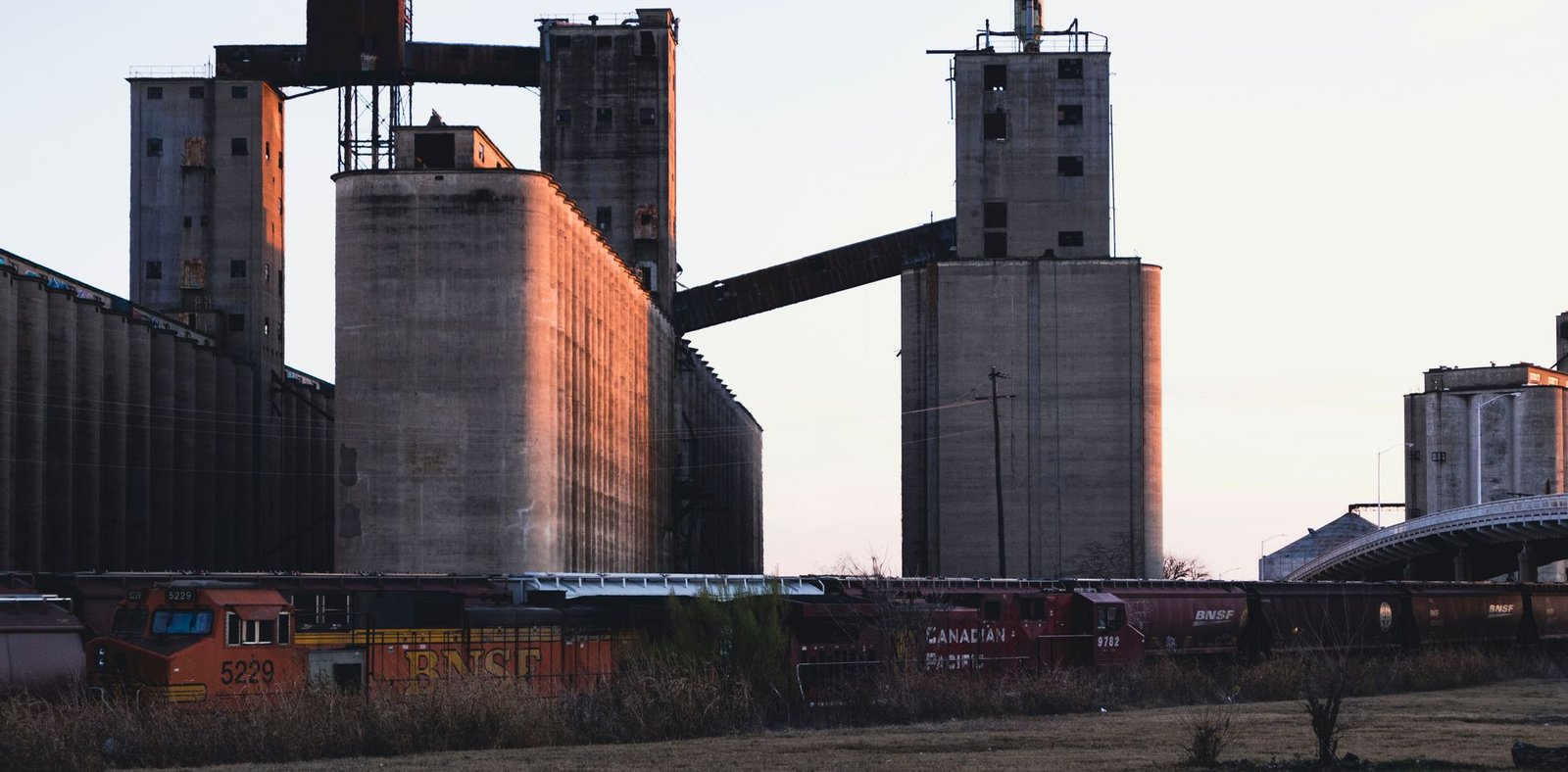
Modern commercial shuttle terminals construct continuous ‘balloon’ or teardrop loop tracks measuring 8,500 to 9,500 feet in circumference that circle the perimeter of the agricultural facility. A full 110-car Class I unit train—measuring over 1.2 miles in length and powered by three 4,400-horsepower diesel locomotives—pulls directly off the mainline onto the loop track in a single fluid movement.
The train remains completely coupled at all times with locomotives attached. Automated computerized train-indexing systems move the train continuously through the rapid loadout tower at a steady speed of 0.3 miles per hour, utilizing high-capacity optical sensors and automated hydraulic discharge chutes to fill each 111-ton hopper car to within 50 pounds of maximum weight in under four minutes per car.
Comparative Metrics and Fiscal Impact Analysis
The following quantitative dataset summarizes verified public records, capital expenditure benchmarks, and oversight agency audit dockets across regional jurisdictions:
| Grain Terminal Facility | Storage Capacity (Bushels) | Loop Track Rail Length | Loadout Speed (Bushels/Hr) | Class I Connecting Railroad |
|---|---|---|---|---|
| Heartland Cooperative Loop | 8.5 Million Bushels | 9,200 Feet Continuous Loop | 65,000 Bushels / Hour | Union Pacific Mainline |
| Prairie Land Grain Terminal | 6.2 Million Bushels | 8,800 Feet Balloon Track | 55,000 Bushels / Hour | BNSF Northern Route |
| Cedar Valley Grain Hub | 7.4 Million Bushels | 9,000 Feet Rapid Loop | 60,000 Bushels / Hour | Canadian National Link |
| Mid-Iowa Farmers Terminal | 5.8 Million Bushels | 8,500 Feet Teardrop Loop | 50,000 Bushels / Hour | CPKC North-South Trunk |
Automated Official Grain Inspection and Certified Electronic Weighing
Commercial grain export contracts require rigorous certified quality verification under the oversight of the USDA Federal Grain Inspection Service (FGIS). In modern rapid loadout towers, continuous pneumatic diverter samplers extract representative grain samples from the falling grain stream inside the elevated elevator headhouse, routing samples directly to on-site licensed grain grading laboratories.
Automated analytical instruments measure moisture content, test weight per bushel, foreign material percentages, and broken kernel fractions in real time while loading operations are underway. Simultaneously, National Type Evaluation Program (NTEP) certified bulk weighing scales record certified net weights for every individual hopper car, transmitting cryptographically signed electronic bill-of-lading data directly to railroad billing servers and international grain buyers.
If a loadout stream detects grain quality deviating from contractual export specifications (such as US No. 2 Yellow Corn standards), automated flow valves instantly divert the grain to secondary conditioning bins before it can enter waiting railcars, ensuring absolute compliance with international export contracts.
Basis Cost Optimization and International Ocean Export Velocity
The economic impact of 110-car unit-train shuttle facilities is profound: railroads offer substantial freight rate discounts—often ranging from $0.25 to $0.45 per bushel—for full unit-train shipments compared to single-car or small-block freight rates. Agricultural cooperatives pass these transportation cost savings directly back to local farmer-members through narrower local cash basis bids, putting millions of dollars in additional revenue directly into farm family pockets.
A full 110-car grain train loaded in Iowa reaches deepwater export terminals at the Port of New Orleans or Pacific Northwest ports within 48 to 72 hours, where the grain is unloaded into international bulk ocean freighters bound for global export markets.
Agricultural marketing economists confirm that unit-train balloon loop terminals are the physical infrastructure engines that allow American family farmers to feed the world while sustaining the rural Midwest economy.
Official Public Records and Statutory Citations
The documentary evidence and administrative filings referenced in this investigation are indexed under the following public record dockets:
- United States Grain Standards Act, 7 U.S.C. 71 et seq. (Official Inspection and Weighing Requirements).
- Surface Transportation Board, Ex Parte No. 661, Rail Fuel Surcharges and Agricultural Tariffs.
- United States Department of Agriculture, Federal Grain Inspection Service, Grain Inspection Handbook.
- Iowa Department of Agriculture and Land Stewardship, Grain Warehouse Bureau Regulatory Rules.
Independent Oversight Outlook
The expansion of continuous unit-train balloon loop terminals represents a triumph of agricultural logistics engineering. As global food demand escalates through 2026 and 2027, modern Midwestern rail grain terminals will ensure that American grain flows to world markets with unmatched efficiency, speed, and reliability.
Spotted an error? Read our corrections policy and let us know.
Keep reading
Anaerobic Digestion and Biological Nutrient Removal Mandated for Regional Dairy Processing Wastewater
Variable-Speed Electric Drive Motor Retrofits Electrify Interstate Pipeline Compressor Stations
Permanent Mineral Trust Funds Restructure Asset Allocations and Rural Infrastructure Transfers