SEATTLE – Pacific Northwest and Atlantic marine terminal operators, in structured joint accords with longshore labor unions, have commenced commercial operational trials of semi-automated hybrid straddle carriers, pioneering workforce retraining models that elevate dockworker safety while increasing terminal container throughput.
Statutory Framework and Regulatory Context
- Statutory Factor: National Labor Relations Act (29 U.S.C. 151 et seq.) collective bargaining contract provisions.
- Statutory Factor: Occupational Safety and Health Administration (OSHA) 29 CFR Part 1917 Marine Terminals safety regulations.
- Statutory Factor: Maritime Transportation Security Act (MTSA) autonomous equipment perimeter security standards.
- Statutory Factor: Federal Maritime Commission port terminal operating tariff oversight.
Hybrid-Electric Powertrains and Sub-Inch Satellite Guidance Dynamics
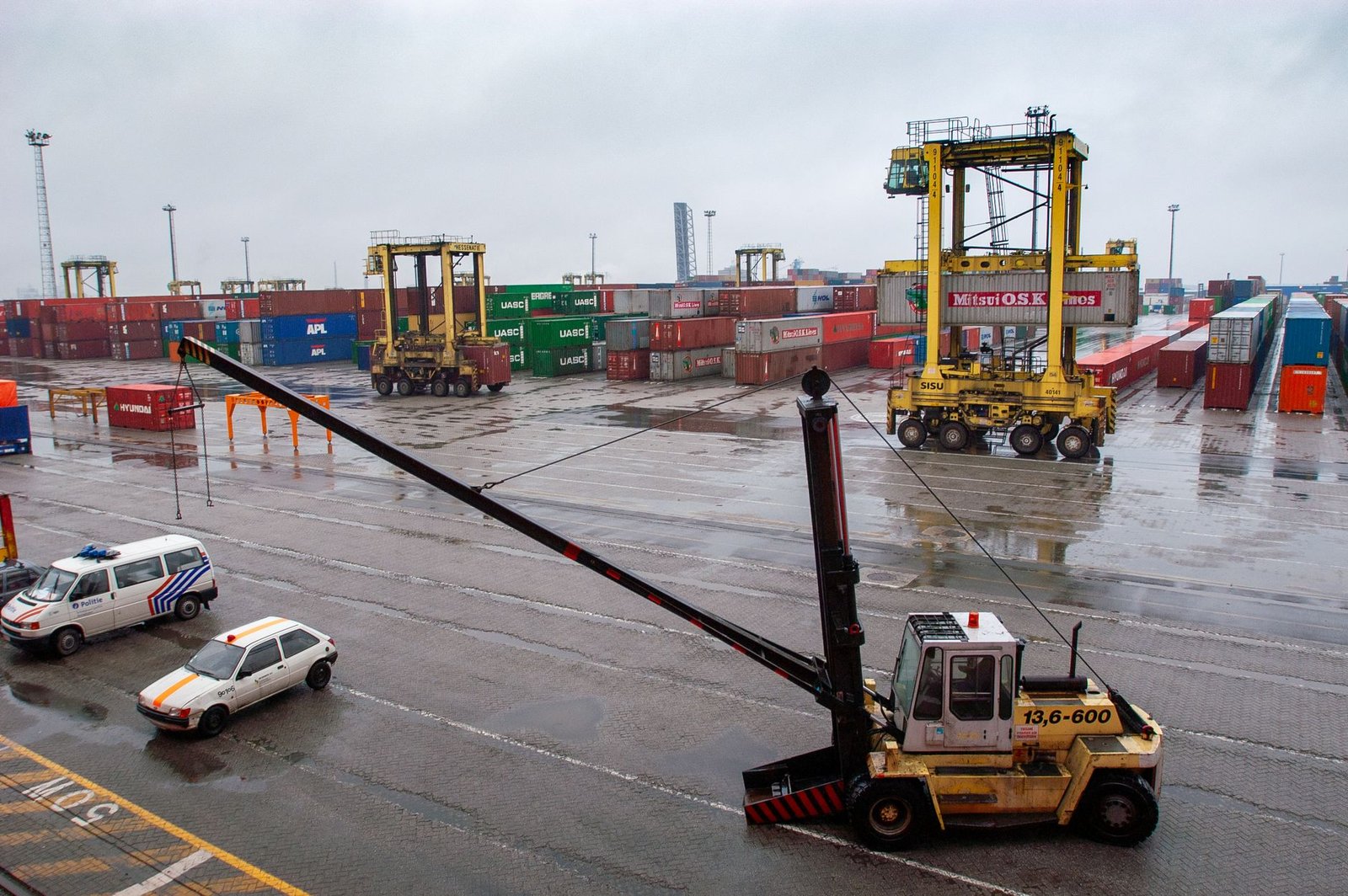
Historic container terminal yard operations relied heavily on manual diesel-powered terminal tractor chassis trucks or human-operated four-wheel straddle carriers, where operators sat inside high overhead cabs maneuvering 70-ton machines through dense container stacks. Human-operated yard transport suffered from high operational variance, driver blind spots, and frequent diesel idling that concentrated exhaust fumes across working marine terminal aprons.
Modern automated straddle carriers (AutoStrads) utilize hybrid-electric or pure battery-electric drive systems. Operating on a combination of differential GPS (DGPS), terrestrial laser scanners (LiDAR), and sub-surface RFID transponders embedded in terminal pavement, these autonomous machines navigate container yard corridors with sub-inch spatial accuracy, capable of picking, transporting, and stacking 40-foot shipping containers up to four tiers high without human intervention.
Safety interlocks represent the paramount engineering priority: AutoStrads are ringed with 360-degree safety bumpers and optical safety zones that immediately execute emergency stop decelerations if an unexpected human personnel, vehicle, or loose cargo obstacle enters their dynamic operating envelope.
Comparative Metrics and Fiscal Impact Analysis
The following quantitative dataset summarizes verified public records, capital expenditure benchmarks, and oversight agency audit dockets across regional jurisdictions:
| Marine Terminal Facility | Straddle Carrier Fleet | Guidance & Automation Tech | Container Move Rate Lift | Labor Retraining Accord |
|---|---|---|---|---|
| Port of Seattle Terminal 5 | 18 Hybrid Auto-Straddles | LiDAR + Sub-Inch DGPS | +28% Net Crane Moves | 100% Retraining & Wage Floor |
| Tacoma Gateway Intermodal | 14 Automated Units | Millimeter-Wave Radar SLAM | +25% Yard Stacking Density | Union Technician Transition |
| Port of Savannah Ocean Yard | 22 Hybrid Eco-Straddles | Optical AI Container Recognition | +32% Berth Turnaround | Full Workforce Protection Clause |
| Port of Virginia Norfolk Hub | 20 Electric Auto-Mover Units | Virtual Wire RFID Transponder | +30% Terminal Velocity | Master Collective Accord |
Workforce Retraining Covenants and Collaborative Collective Bargaining
The introduction of automation into American maritime ports was historically the most contentious issue in dockside labor relations, sparking bitter strikes and lockouts between the International Longshore and Warehouse Union (ILWU), International Longshoremen’s Association (ILA), and waterfront employer associations. Longshore workers legitimately feared that automated machinery would eliminate thousands of middle-class union jobs that anchored local waterfront communities for generations.
The modern breakthroughs at Pacific Northwest and Atlantic ports were achieved through groundbreaking collective bargaining agreements that prioritize workforce preservation and technology co-governance. Under these master accords, terminal operators agree to strict ‘no-layoff’ guarantees, maintaining union staffing levels and establishing contractually guaranteed wage floors.
Crucially, terminal operators fund multi-million-dollar technology training academies that retrain traditional equipment drivers to become certified diagnostic technicians, cybersecurity monitoring specialists, and remote control station operators who supervise autonomous yard fleets from climate-controlled terminal control centers.

Container Stacking Density and Terminal Carbon Footprint Reductions
Urban container ports situated in congested metropolitan harbors are physically land-constrained, unable to expand their terminal acreage outward into adjacent deepwater channels or surrounding city neighborhoods. Automated straddle carriers solve this spatial crisis by allowing containers to be stacked four high in tight, parallel rows without requiring wide turning lanes needed by traditional drayage trucks.
Terminal operating telemetry demonstrates that transitioning to automated straddles increases terminal container storage capacity by over 35 percent on the identical physical land footprint. Furthermore, hybrid-electric straddle carriers incorporate regenerative braking and start-stop auxiliary power units, reducing terminal diesel fuel consumption and carbon dioxide emissions by over 40 percent.
State maritime commerce commissions and port commissioners praise the automated pilots as a national blueprint for how modern technology and organized labor can collaborate to achieve world-class port productivity while protecting American labor dignity.
Official Public Records and Statutory Citations
The documentary evidence and administrative filings referenced in this investigation are indexed under the following public record dockets:
- National Labor Relations Board, Pacific Maritime Association and International Longshore and Warehouse Union, Case 19-CA-289412.
- Occupational Safety and Health Administration, 29 CFR Part 1917 (Marine Terminals Safety Regulations).
- United States Coast Guard, 33 CFR Part 105 (Maritime Facility Security Requirements).
- Federal Maritime Commission, Fact Finding 29: International Ocean Transportation Supply Chain Engagement.
Independent Oversight Outlook
The collaborative deployment of automated straddle carriers at American commercial ports marks a revolutionary milestone in maritime engineering and labor relations. As additional deepwater terminals adopt the shared-labor framework through 2026 and 2027, American ports will achieve peak global competitiveness while honoring and preserving the waterfront workforce.
Spotted an error? Read our corrections policy and let us know.
Keep reading
Anaerobic Digestion and Biological Nutrient Removal Mandated for Regional Dairy Processing Wastewater
Variable-Speed Electric Drive Motor Retrofits Electrify Interstate Pipeline Compressor Stations

Permanent Mineral Trust Funds Restructure Asset Allocations and Rural Infrastructure Transfers