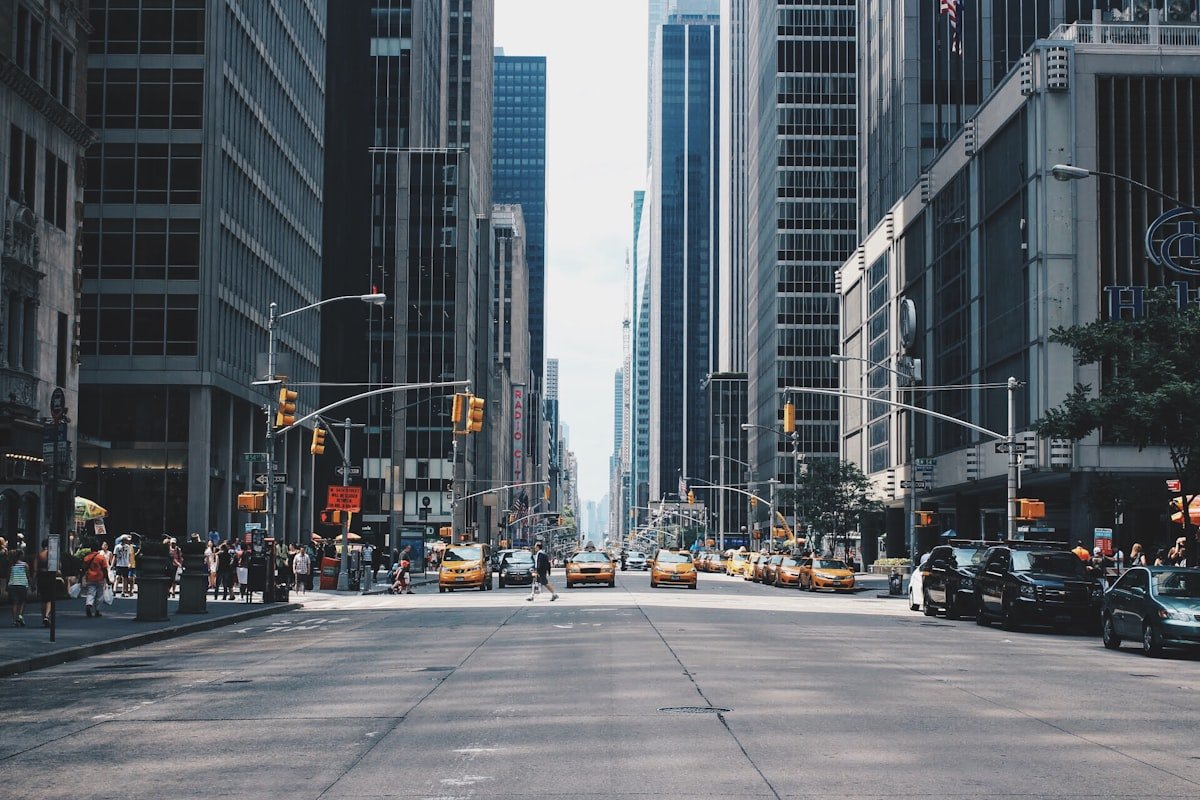
New York’s Congestion Relief Zone remains in operation according to the MTA’s live tolling portal. A passenger vehicle with a valid E-ZPass currently pays $9 during the peak period and $2.25 overnight to enter local streets and avenues in Manhattan south of and including 60th Street. Rates vary by vehicle, payment method, time, and crossing credit. The initial schedule phases the passenger peak rate to $12 in 2028 and $15 in 2031, but drivers should check the calculator before traveling because litigation, rules, and account status can change.
Source verification updated October 1, 2026. Tolling and legal status are time-sensitive. The MTA rate calculator, E-ZPass account record, official discount/exemption decision, and current court orders control an individual trip.
1. Where and when the toll applies
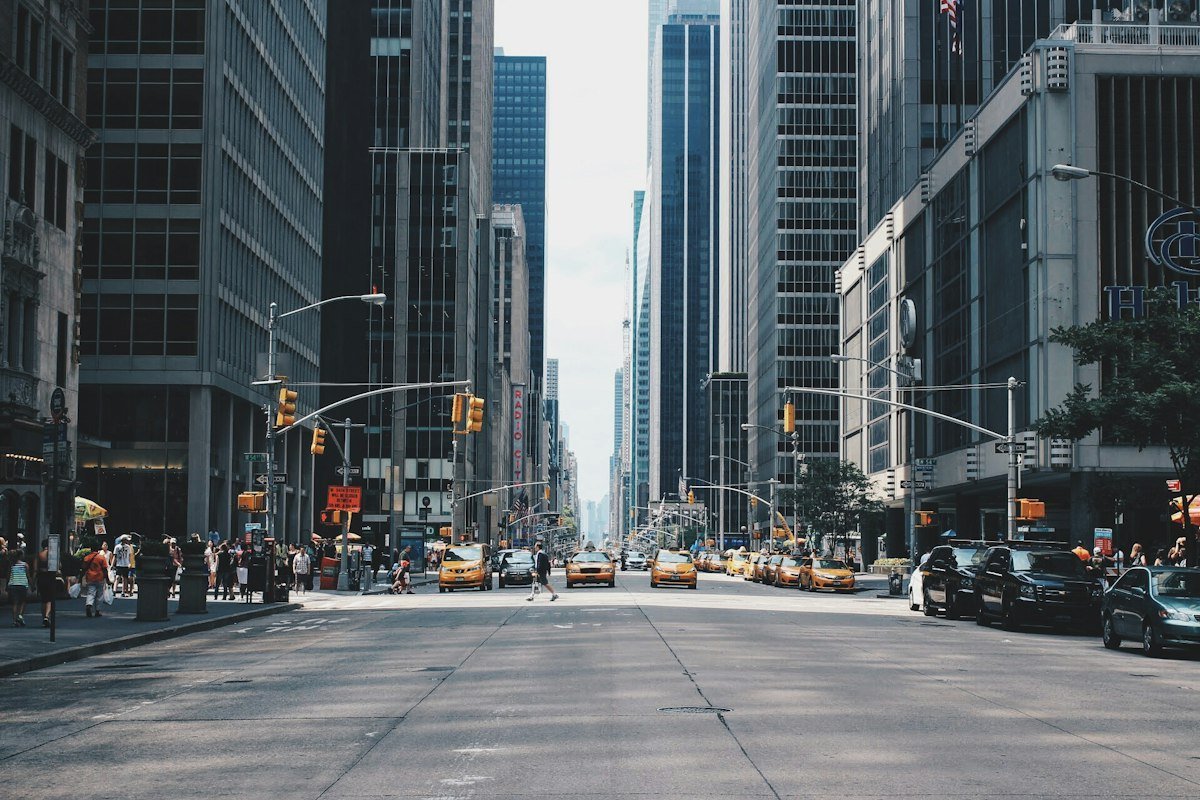
The zone covers local streets and avenues south of and including 60th Street. The FDR Drive, West Side Highway/Route 9A, and specified Hugh L. Carey Tunnel connections to West Street are excluded, but a driver who leaves an excluded roadway for a local street can cross a tolling point. The MTA publishes detailed connection maps because a route that looks like a continuous excluded corridor may require a tolled local-street movement.
Peak hours are 5 a.m. to 9 p.m. on weekdays and 9 a.m. to 9 p.m. on weekends. Overnight rates are 75 percent below the corresponding peak rate. Passenger vehicles and motorcycles are charged no more than once per day; trucks are generally charged per entry. Taxis and TLC-licensed for-hire vehicles use a per-trip passenger charge instead of the daily vehicle toll.
| Vehicle/payment | Current peak | Current overnight | Frequency |
|---|---|---|---|
| Passenger/small commercial, valid E-ZPass | $9.00 | $2.25 | Once per day |
| Passenger/small commercial, Tolls by Mail | $13.50 | $3.30 | Once per day |
| Motorcycle, valid E-ZPass | $4.50 | $1.05 | Once per day |
| Small truck/some buses, valid E-ZPass | $14.40 | $3.60 | Per entry unless exempt |
| Large truck/tour bus, valid E-ZPass | $21.60 | $5.40 | Per entry unless exempt |
| Taxi, green cab, black car | $0.75 per qualifying trip paid by passenger | Per trip | |
| High-volume for-hire vehicle | $1.50 per qualifying trip paid by passenger | Per trip | |
Crossing credits apply only during peak hours, require a valid E-ZPass, and are limited to entry through the Lincoln, Holland, Queens-Midtown, or Hugh L. Carey tunnels. The maximum passenger credit is $3; larger vehicle credits differ. A credit reduces the zone toll but does not necessarily eliminate it.
2. Discounts and exemptions are separate programs
The Low-Income Discount Plan is for the registered owner of an eligible passenger vehicle who has federal adjusted gross income of no more than $50,000 or participates in SNAP, TANF, or WIC. After ten trips in the same calendar month, the eligible vehicle receives a 50-percent discount on later peak-period trips that month. Overnight trips count toward the ten-trip threshold, but the low-income discount is not added to the already reduced overnight rate.
The Individual Disability Exemption Plan is different: it can exempt one designated vehicle when transporting a qualifying person with a disability. Organizational, emergency, scheduled commuter-bus, and specialized government-vehicle plans have their own criteria. Low income does not create disability eligibility, and disability eligibility does not automatically enroll a driver in the low-income plan. The earlier version of this article incorrectly blended these programs.
E-ZPass users should link the correct plate and vehicle class to the account and mount the tag as instructed. Tolls by Mail is more expensive. The registered owner remains responsible for notices, deadlines, and account disputes; a dashboard screenshot or map is not a substitute for the transaction record.
Small businesses should calculate the zone charge separately from bridge or tunnel tolls, parking, commercial curb rules, and a customer’s taxi or for-hire surcharge. A crossing credit applies only to the Congestion Relief Zone charge; it is not a refund of the original tunnel toll. Employers should also avoid assuming that a worker’s income, residence, or essential occupation creates an exemption—the published plans are vehicle- and eligibility-specific.
3. What the revenue promise means
The 2019 law and MTA capital plan use congestion-pricing revenue to support $15 billion in capital improvements. The statutory allocation is 80 percent for New York City Transit subway and bus projects, 10 percent for Long Island Rail Road, and 10 percent for Metro-North. This is capital funding capacity, not $15 billion collected in cash on the program’s first day.
MTA’s published eligible uses include accessibility upgrades, signal modernization, rolling stock, power and maintenance work, Second Avenue Subway Phase 2, and commuter-rail improvements. Eligibility does not prove that every named project has received a final congestion-pricing allocation. The MTA says individual project allocations are documented as decisions are made.
Board records provide dated operating results. For the first six months of tolling through June 2025, MTA reported an average of 70,000 fewer vehicles per day, an 11-percent reduction, and $268.5 million in net revenue. Through September 2025, it reported $507 million in total revenue, $96.4 million in expenses, and $411 million net. Those are agency figures for defined periods, not a blanket “current 2026” result. The prior table’s 15–18-percent reduction, 9.5–10.8 mph average, and 8–12-percent pollution decline were not tied to a source and have been removed.
4. Do not confuse capital eligibility with operating performance
Communications-Based Train Control can improve service reliability and support closer train spacing, but it does not track every train to a “precise millimeter,” and a 25-percent capacity increase is not universal. Each line has different signal, fleet, interlocking, power, construction, and operating constraints. Riders should use the MTA capital dashboard for scope, budget, phase, and expected completion date rather than attributing every service change to congestion pricing.
The same caution applies to accessibility and expansion projects. A station can be listed as eligible, funded, in procurement, under construction, or complete. Second Avenue Subway Phase 2, CBTC work, elevators, Penn Station Access, and zero-emission buses have different budgets and dependencies. A professional progress report names the specific project and date.
5. Environmental justice commitments
The federal environmental review found regional air-quality benefits were expected but also evaluated potential truck diversions into already burdened communities. The June 2024 reevaluation described $330 million in total mitigation commitments when program-wide discounts and other measures were included, with $100 million in place-based mitigation for 13 identified environmental-justice communities.
Specified place-based measures include $15 million to replace diesel-powered transport refrigeration units at Hunts Point Produce Market, $20 million for a Bronx asthma center and case-management program, and $20 million for electric-truck charging infrastructure. Other measures include school air filtration, roadside vegetation, parks and green space, expanded clean-truck support, traffic monitoring, ramp metering, and signal timing.
These are commitments and implementation programs, not proof that measured PM2.5 or NOx fell by a fixed percentage in every corridor. Air quality should be assessed with monitoring data, time windows, weather controls, and site-specific methods. The earlier article’s unsupported 8–12-percent decline has been deleted.
6. Legal status and a practical checklist
The program has faced litigation from New Jersey parties and later conflict with the federal government. The legal record includes multiple claims, agencies, courts, and dates; it does not support the former article’s sweeping statement that one ruling established broad constitutional authority over all dynamic road pricing. As of this verification, the MTA’s official portal says vehicles are being tolled. Because legal status can change, readers should verify the current portal and any controlling order rather than relying on a static summary.
- Use the MTA toll calculator with the exact vehicle, time, payment method, and entry.
- Confirm the license plate, class, address, and payment method in the E-ZPass account.
- Apply separately for LIDP or the relevant exemption and wait for approval before assuming it applies.
- Keep the transaction, crossing credit, bill, and appeal documents.
- For fleet planning, compare peak, overnight, and delivery constraints; do not assume a discount justifies unsafe or disruptive scheduling.
- For policy analysis, label projections, MTA-reported results, audited results, and independent research separately.
Related source-verified coverage explains Massachusetts transit-oriented zoning and North Carolina infrastructure funding.
Primary official sources
- MTA: current Congestion Relief Zone tolls, hours, credits, discounts, and exemptions
- MTA: Low-Income Discount Plan eligibility and application
- MTA: organizational and vehicle exemption plans
- MTA: Individual Disability Exemption Plan assessment services
- MTA: eligible transit capital improvements and 80/10/10 allocation
- MTA Finance Committee: first six months traffic and revenue
- MTA Finance Committee: nine months revenue and expenses
- MTA: June 2024 environmental reevaluation and mitigation commitments
- New York Vehicle and Traffic Law, Article 44-C