The Midwest Hydrogen Hub, led by the Midwest Alliance for Clean Hydrogen (MachH2), has a federal cost-share ceiling of up to $1 billion. That is not the amount already spent and it does not mean a Chicago hydrogen corridor is operating. The U.S. Department of Energy awarded $22.2 million in November 2024 for Phase 1 planning, analysis, design, labor and community engagement. DOE described nine proposed projects across Illinois, Indiana, Iowa, and Michigan and reserved later funding for additional review and go/no-go decisions.
Source verification updated October 1, 2026. Project awards, tax rules, permits, sites, and construction schedules can change. This report distinguishes current public records from proposals and does not provide investment, tax, engineering, or permitting advice.

1. What the federal award actually authorizes
DOE selected seven regional clean-hydrogen hubs in 2023. For MachH2, the agency later finalized an initial $22.2 million award from a potential federal cost share of up to $1 billion. DOE said Phase 1 was expected to last up to 18 months and cover planning, analysis, design, and community and labor engagement. The National Environmental Policy Act determination for that phase covers information gathering and design work; it does not authorize construction of all nine proposed projects.
This distinction matters. “Selected,” “awarded for Phase 1,” “permitted,” “under construction,” and “operating” are different milestones. The latest public DOE records reviewed for this article confirm the Phase 1 award. They do not establish that the full federal ceiling has been obligated, that every proposed site has passed environmental review, or that an integrated Illinois hydrogen network is carrying fuel today.
| Claim | Verified status | What would prove the next stage |
|---|---|---|
| MachH2 received $1 billion | Incorrect. Federal cost share is up to $1 billion; $22.2 million was awarded for Phase 1. | A dated DOE award notice for a later phase and its obligated amount. |
| Chicago has an operating green-hydrogen freight corridor | Not established by the reviewed public records. | Named sites, permits, commissioning records, production data, and customer contracts. |
| All proposed hydrogen is zero-emission | Not established. DOE describes a mix of renewable, nuclear, and natural-gas resources. | Facility-specific lifecycle emissions verified under an applicable method. |
| Dedicated Illinois pipelines and geologic storage are ready | Not established. | Route, regulator, permit, safety case, construction, and operating records. |
2. Why Chicago’s freight system is relevant
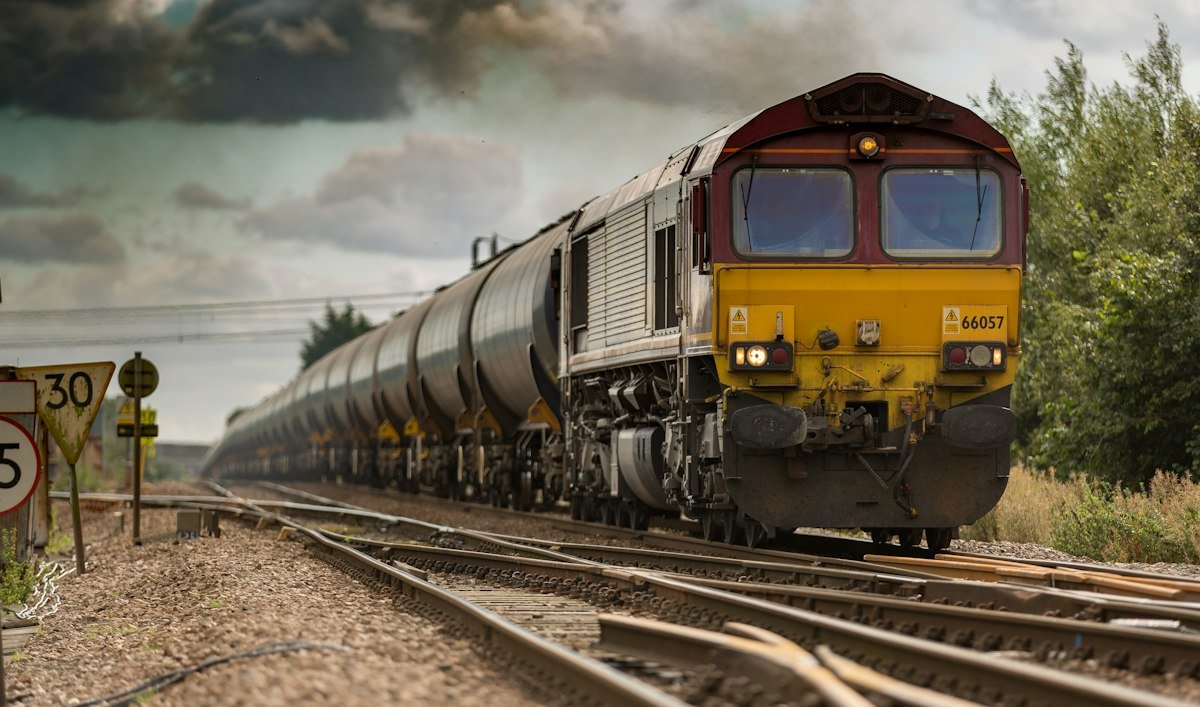
The Chicago Metropolitan Agency for Planning says one quarter of all U.S. rail freight originates, terminates, or passes through northeastern Illinois. An earlier CMAP regional plan reported that about half of the nation’s intermodal trains passed through metropolitan Chicago. Those figures support the region’s importance as a logistics interchange, not a forecast that hydrogen will automatically displace diesel.
Freight activity also creates local costs: diesel exhaust, noise, grade-crossing delay, safety risk, and truck traffic are concentrated near rail yards and industrial corridors. A credible clean-freight program therefore needs more than a statewide emissions estimate. It should publish site-level baseline pollution, expected changes, construction impacts, operating emissions, truck and train activity, and monitoring results for nearby communities.
Hydrogen may be useful where duty cycles, range, payload, or high-temperature industrial processes make direct electrification difficult. DOE’s national strategy identifies chemicals, steel, industrial heat, some medium- and heavy-duty transport, rail, maritime uses, and long-duration storage as potential high-impact applications. That is a strategic framework, not proof that hydrogen is the best option for every bus, municipal vehicle, locomotive, or warehouse. Battery-electric equipment, efficiency, rail operational improvements, and grid upgrades must be compared on cost, emissions, safety, and reliability for each use case.
3. CEJA creates a clean-energy direction, not a hydrogen construction permit
Illinois enacted the Climate and Equitable Jobs Act in 2021. State agencies describe its policy goal as a 100-percent clean-energy economy by 2050. Illinois EPA separately explains statutory schedules under which covered private gas-fired generating units must reduce carbon dioxide-equivalent and co-pollutant emissions to zero no later than 2045, with earlier deadlines for certain units. The prior version of this article compressed these provisions into a universal “zero-emission electricity by 2045” mandate, which was too broad.
CEJA supports renewable development, electric-vehicle infrastructure, consumer programs, transition assistance, and clean-energy workforce programs. The Department of Commerce and Economic Opportunity administers workforce initiatives aimed at people and communities facing historic barriers or energy transitions. Those programs can support a future hydrogen workforce, but the public CEJA description does not mean that every trainee has a guaranteed hydrogen-pipeline job or that every hydrogen project is covered by one identical labor requirement.
Likewise, Illinois Commerce Commission CEJA proceedings concern electricity regulation, grid planning, consumer participation, and related state directives. We did not find an ICC record in the sources reviewed that confirms a dedicated pipeline from Illinois nuclear plants to Calumet and Joliet. Any proposed pipeline would require a named developer, route, material and pressure specification, jurisdictional analysis, environmental review, emergency plan, and relevant federal, state, and local approvals.
4. Production method determines whether hydrogen is “clean”
Hydrogen is an energy carrier, not a primary source. Its climate effect depends on electricity or feedstock, upstream methane, conversion efficiency, carbon capture performance, compression, transport, leakage, and end use. Color labels such as “green,” “pink,” or “blue” are shortcuts; they do not replace a lifecycle emissions calculation.
DOE says MachH2 plans to draw from renewable wind, natural gas, and nuclear energy. The project may explore electrolysis and other pathways, but the reviewed federal award material describes proposed work rather than continuous commercial production at every named resource. Claims that electrolyzers are already integrated at Illinois nuclear plants at “massive industrial volume,” or that unsubsidized hydrogen is already cost-competitive with fossil hydrogen, are not supported by the cited award records and have been removed.
The federal Section 45V clean-hydrogen production credit is also conditional. IRS guidance requires qualified U.S. production, verified sale or use, and lifecycle-emissions documentation. The amount is tiered by emissions and can be multiplied when prevailing-wage and apprenticeship conditions are met. Current IRS instructions also say facilities beginning construction after 2027 are excluded under the 2025 statutory change. A municipality or fleet operator cannot simply claim a universal $3-per-kilogram subsidy; the producing taxpayer must satisfy the law and current guidance.
5. Pipelines, storage, and fueling require evidence and safety controls
DOE reports that most operating U.S. hydrogen pipelines are concentrated near large refinery and chemical users. New construction faces high capital costs as well as hydrogen embrittlement, permeation, leak-control, compression, inspection, and material-compatibility challenges. Hydrogen is highly flammable, can be difficult to detect without sensors, and can indirectly affect climate if leaked. These are manageable engineering risks, but they are not solved by labeling a project clean.
Underground hydrogen storage in saline aquifers is still an area of research and demonstration. DOE’s SHASTA program evaluated porous rock, depleted reservoirs, saline aquifers, salt caverns, materials, microbes, leakage, and well integrity, then proposed field-scale testing. That research does not verify that Illinois’ Mt. Simon formation is permitted and operating as a seasonal hydrogen reserve. A real storage proposal would need site-specific characterization, injectivity and recoverability tests, caprock and well analysis, groundwater protection, monitoring, emergency procedures, and regulatory approval.
Local officials evaluating a production plant, pipeline, terminal, or station should use current fire and building codes, consult the authority having jurisdiction, and require quantitative hazard analysis, ventilation, separation distances, compatible materials, leak detection, shutdown systems, responder training, and public communication. DOE points permitting officials to H2Tools and hydrogen safety, codes, and standards resources; a generic reference to NFPA 2 is not itself a permit.
6. A decision framework for Illinois governments and businesses
- Verify the milestone. Ask for the DOE award number, phase, amount, scope, site, and go/no-go status. Do not market a ceiling as money received.
- Demand lifecycle data. Identify electricity and feedstock sources, methane assumptions, carbon-capture rate where relevant, transport energy, leakage, and the verification method.
- Compare alternatives. Evaluate direct electrification, batteries, efficiency, renewable fuels, operational changes, and hydrogen against the actual duty cycle.
- Secure offtake before oversizing infrastructure. Production, storage, pipelines, and stations need credible customers, volumes, pricing, and contingency plans.
- Publish community protections. Report baseline pollution, expected local emissions, water demand, truck movements, emergency planning, workforce access, and complaint channels.
- Separate projections from results. Jobs, emissions reductions, range, refueling time, and production cost should carry a source, assumptions, date, and operating status.
The opportunity is real but conditional. Illinois has a major freight economy, extensive industrial demand, nuclear generation, renewable resources, and a federal Phase 1 hub award. Turning those assets into durable emissions reductions requires later awards, site-specific permits, customers, safety systems, transparent community engagement, and measured operating results. Until those records exist, MachH2 should be described as a phased regional development program—not a completed zero-emission freight corridor.
Related source-verified reporting covers New York congestion pricing and transit funding and North Carolina infrastructure and rural investment.
Primary official sources
- U.S. Department of Energy: $22.2 million Midwest Hydrogen Hub Phase 1 award
- U.S. Department of Energy: MachH2 Phase 1 NEPA determination
- Chicago Metropolitan Agency for Planning: freight and rail
- State of Illinois: CEJA and climate action
- Illinois EPA: covered generating-unit requirements
- Illinois DCEO: CEJA workforce and economic-development programs
- Internal Revenue Service: current Form 7210 instructions for Section 45V
- U.S. Department of Energy: National Clean Hydrogen Strategy and Roadmap
- U.S. Department of Energy: underground hydrogen storage assessment
- U.S. Department of Energy: hydrogen safety, leakage, and materials