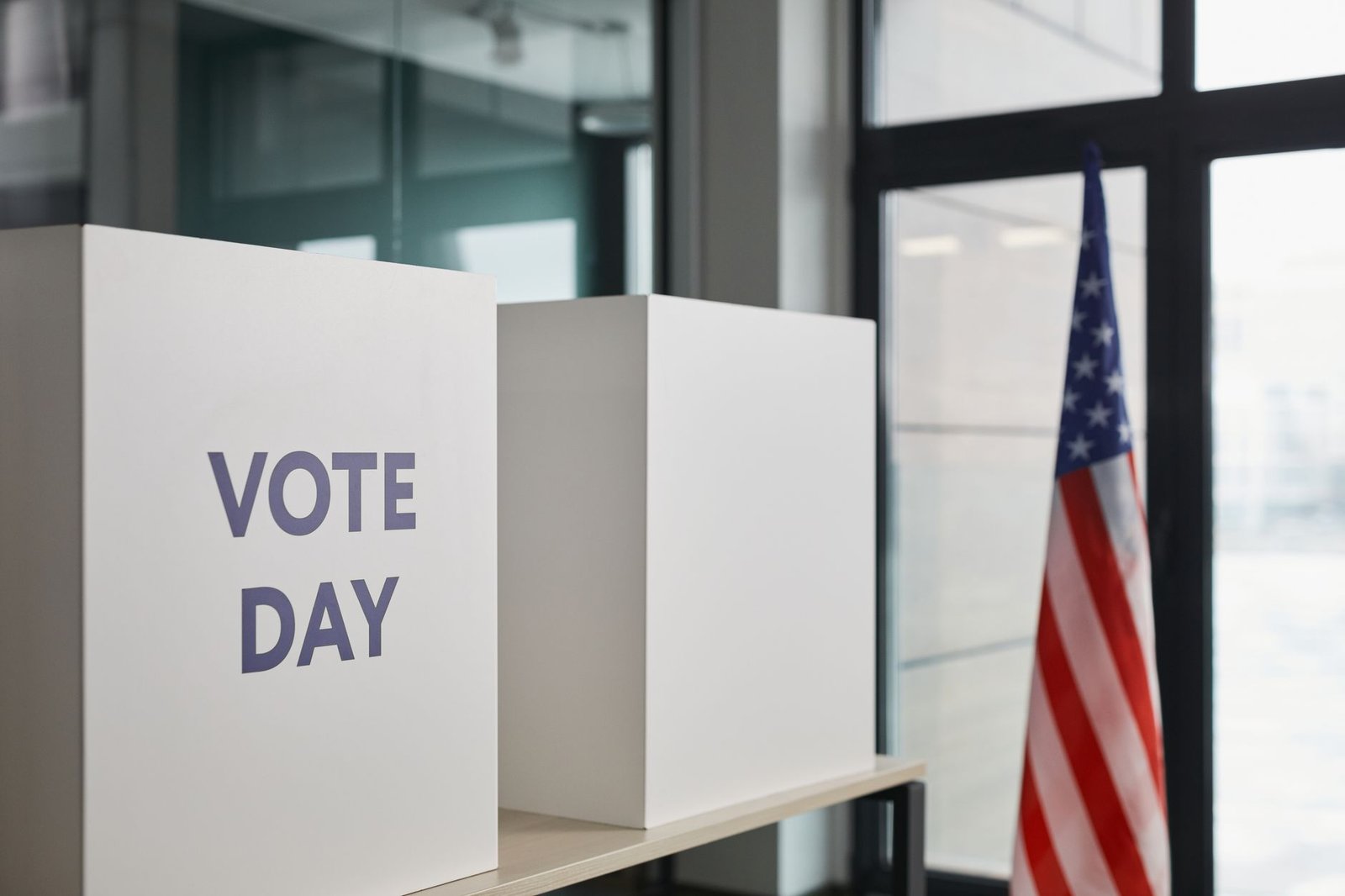
COLUMBUS – State supreme courts and federal appellate circuits across the Midwest are adjudicating clashing constitutional challenges over partisan primary voting systems, balancing political parties’ First Amendment associational rights against state interests in democratic participation and open ballot access.
Statutory Framework and Regulatory Context
- Statutory Factor: United States Constitution, First and Fourteenth Amendments (Freedom of Association Jurisprudence).
- Statutory Factor: State Election Codes governing voter party affiliation declarations and primary ballot access.
- Statutory Factor: Supreme Court precedent in California Democratic Party v. Jones (530 U.S. 567).
- Statutory Factor: State constitutional voting rights protections and open-nomination ballot initiatives.

Party Associational Autonomy Versus Statutory Open Access Codes
The core constitutional tension in primary election law arises from the dual legal nature of political parties: they are simultaneously private expressive associations possessing robust First Amendment rights to define their internal governance and select standard-bearers, and public institutional actors whose primary nominations are regulated, financed, and administered by state governments. For decades, many Midwestern states maintained open or semi-open primary election statutes, allowing unaffiliated independent voters—and even registered members of opposing parties—to vote in any party’s primary ballot on election day.
Political party central committees have filed sweeping constitutional challenges against these statutes, relying on the Supreme Court’s landmark 2000 ruling in California Democratic Party v. Jones, which struck down California’s blanket primary law. Party plaintiffs argue that forcing a political party to open its candidate nomination process to electors who do not share its core political philosophy constitutes unconstitutional compelled association, enabling hostile ‘crossover voting’ where opposing party members vote strategically for weaker candidates.
Conversely, state election officials and independent voter coalitions contend that because taxpayer funds pay for the administration of primary elections, denying registered independent voters the right to participate in the most decisive phase of the democratic process violates state constitutional guarantees of free and open elections.
Comparative Metrics and Fiscal Impact Analysis
The following quantitative dataset summarizes verified public records, capital expenditure benchmarks, and oversight agency audit dockets across regional jurisdictions:
| State Jurisdiction | Current Primary System | Legal Challenge Basis | First Amendment Contention | Judicial Forum |
|---|---|---|---|---|
| Ohio Supreme Court | Semi-Open / Affiliation at Polls | Party Freedom of Association | Exclusion of Non-Party Electors | Direct State Constitutional Review |
| Indiana Southern District | Open Primary with Affiliation Rule | Compelled Speech & Crossover | Unconstitutional Voter Raid | Federal 7th Circuit Docket |
| Missouri Supreme Court | Open Primary Statutory Code | Constitutional Amendment Docket | Party Rule Preemption | Supreme Court Appeal Pending |
| Wisconsin Western District | Open Primary / Secret Balloting | Freedom from Association | Private Association Autonomy | 7th Circuit Appellate Review |

Strategic Crossover Voting and Statistical Evidence in Judicial Records
Federal and state court trials have centered on sophisticated empirical evidence presented by political science expert witnesses regarding the prevalence and impact of strategic crossover voting. State election boards have introduced voter file analyses showing that the vast majority of unaffiliated electors who participate in partisan primaries do so out of sincere desire to vote for a favored candidate in uncompetitive one-party legislative districts, rather than out of a coordinated conspiracy to subvert opposing party nominations.
Trial courts have scrutinized precinct-level voting rolls, examining whether crossover participation altered the outcome of competitive gubernatorial or senatorial primary races. In states with high concentrations of independent voters, such as Ohio and Missouri, independent voters frequently comprise between 15 and 28 percent of total primary ballots cast.
Judicial opinions reflect a deep reluctance to invalidate long-standing statutory election structures without clear empirical proof that non-party participation has systematically distorted party nominating conventions or compelled parties to alter their formal ideological platforms.
The Rise of Final-Four Ranked Choice Primaries and Legislative Pushback
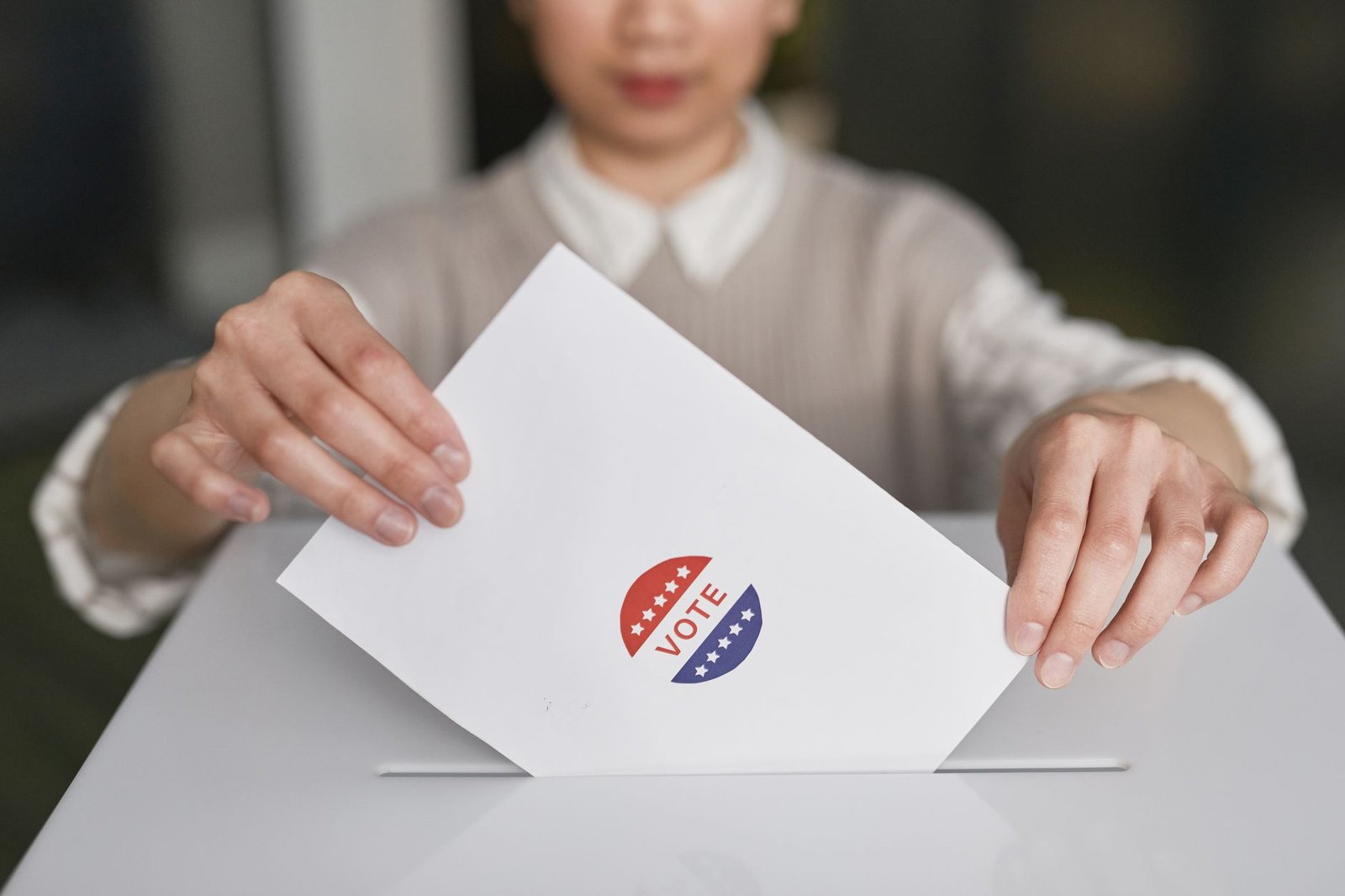
In response to partisan polarization and legal instability surrounding party primaries, citizen reform campaigns have advanced ballot initiatives establishing non-partisan, all-candidate ‘blanket’ primaries—such as the ‘Final Four’ or ‘Top Five’ open primary systems utilized in Alaska—where all candidates appear on a single ballot regardless of party, and the top vote-getters advance to a ranked-choice general election.
State legislative majorities have mounted fierce institutional pushback, enacting statutory bans on ranked-choice voting and attempting to re-impose mandatory closed party registration systems. Legislative leaders assert that non-partisan open primaries weaken traditional party discipline, encourage unaccountable candidate fundraising, and confuse elderly and rural voters with complex multi-round tabulation algorithms.
Civil liberties organizations have intervened to defend ranked-choice initiatives, arguing that constitutional free speech protections guarantee citizens the right to design innovative election systems that incentivize moderate governance and eliminate closed primary extremism.
Official Public Records and Statutory Citations
The documentary evidence and administrative filings referenced in this investigation are indexed under the following public record dockets:
- United States Supreme Court, California Democratic Party v. Jones, 530 U.S. 567 (2000).
- United States Supreme Court, Washington State Grange v. Washington State Republican Party, 552 U.S. 442 (2008).
- Ohio Revised Code, Title 35, Section 3513.19 (Challenge of Elector at Party Primary).
- United States Court of Appeals for the Seventh Circuit, Libertarian Party of Indiana v. Holcomb, 88 F.4th 712.
Independent Oversight Outlook
The constitutional debate over primary voting access strikes at the foundational mechanics of American representative government. With federal appellate and state high court rulings expected throughout 2026, the judicial resolution of crossover voting challenges will determine whether primary elections remain public civic gateways or return to strictly privatized party nominating halls.
Spotted an error? Read our corrections policy and let us know.
Keep reading

Ephemeral Messaging and Disappearing Mobile Chats Ruled Public Records in State Executive Offices
Correctional Facility Privatization Contracts Face Rigorous Performance Metric and Staffing Audits

Unclaimed Property Escheatment Audit Standards Strengthened Under Revised Uniform Act Enforcement