MYSTIC – Maritime museums, historic seaport shipyards, and coastal heritage alliances across New England, the Great Lakes, and the Pacific Northwest have completed multi-year hull restorations and timber refits on surviving 19th-century coastal cargo and fishing schooners, reviving master shipwright trades and keeping active sailing monuments certified under maritime safety standards.
Statutory Framework and Regulatory Context
- Statutory Factor: National Maritime Heritage Act of 1994 (54 U.S.C. 308701 et seq.) grant directives.
- Statutory Factor: United States Coast Guard Subchapter T and Subchapter T-L passenger-carrying vessel regulations.
- Statutory Factor: Secretary of the Interior’s Standards for Historic Vessel Preservation Projects.
- Statutory Factor: National Register of Historic Places Maritime Vessel Evaluation Criteria.
The Living Architecture of Carvel-Planked Wooden Sailing Hulls
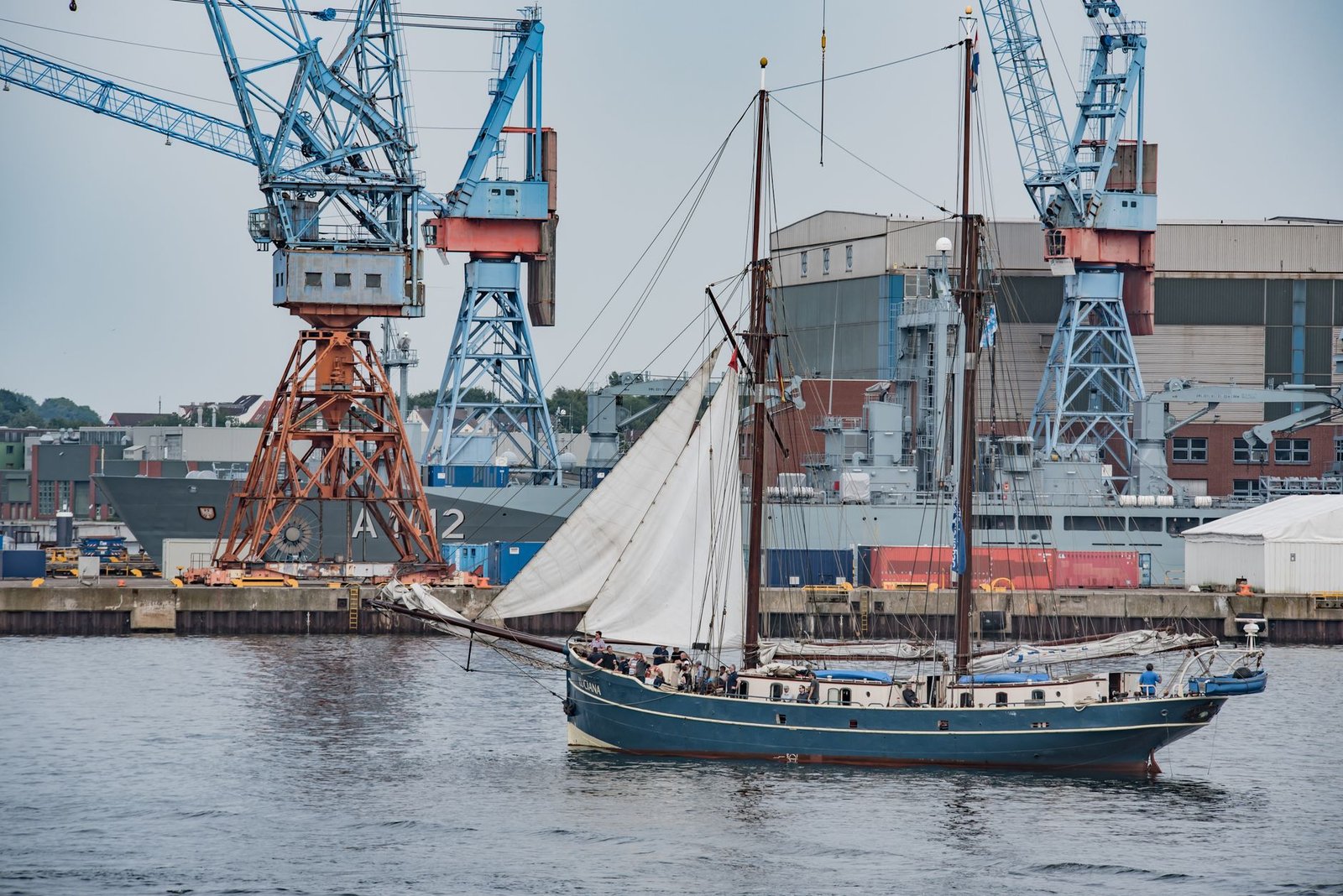
Unlike steel or fiberglass vessels built from rigid manufactured materials, a traditional wooden sailing vessel is a dynamic, living mechanical assembly constructed from hundreds of distinct timber members harvested from old-growth forests. In classic 19th-century American ‘carvel-built’ construction, a massive central timber keelson anchors double-sawn curved ribs (futtocks) fashioned from naturally bent white oak live curves to match the complex hydrodynamics of the hull.
To these ribs, shipwrights steam and bend thick exterior planks of white oak, yellow pine, or Douglas fir, fastening them with hand-turned locust wood pegs (known as ‘trunnels’ or tree-nails) and heavy silicon-bronze or copper drift bolts. As the hull rests in the sea, the wooden planks absorb water and swell tightly against each other, compressing caulked cotton and oakum fibers into an elastic, watertight seal.
However, continuous immersion in marine environments subjects historic wooden hulls to relentless biological and mechanical degradation: marine wood-boring worms (Teredo navalis), brown fungal rot in unventilated interior bilges, and structural ‘hogging’ (where the bow and stern droop downward while the midship arches upward under heavy sea loads).
Comparative Metrics and Fiscal Impact Analysis
The following quantitative dataset summarizes verified public records, capital expenditure benchmarks, and oversight agency audit dockets across regional jurisdictions:
| Historic Wooden Vessel | Build Year & Original Shipyard | Rigging Type & Historic Service | Major Timber Structural Restoration | Current Operating & Heritage Status |
|---|---|---|---|---|
| L.A. Dunton Fishing Schooner | Launched 1921 / Essex, MA | Gaff-Rigged Grand Banks Dory Fisher | White Oak Carvel Planking & Futchel Frames | National Historic Landmark / Museum |
| C.A. Thayer Lumber Schooner | Launched 1895 / Fairhaven, CA | Three-Masted West Coast Cargo | Douglas Fir Keelson & Ceiling Planking | National Historic Landmark at SFO |
| Victory Chimes Coasting Schooner | Launched 1900 / Bethel, DE | Three-Masted Chesapeake Ram Schooner | Bronze Fastener Replacement & Trunnel Pegs | National Historic Landmark in Maine |
| Wawona Pacific Lumber Schooner | Launched 1897 / Bandon, OR | Three-Masted Coastal Timber Trader | Archival 3D Hull Laser Documentation | Historic American Engineering Record |

Traditional Shipwright Steam Bending, Caulking, and Trunnel Joinery
Restoring a historic wooden tall ship requires master shipwright skills that cannot be replicated by automated machinery. In dedicated historic shipyard drydocks, shipwrights steam massive oak hull planks—some measuring three inches thick and twenty-four feet in length—inside specialized timber steam boxes for several hours at 212 degrees Fahrenheit until the wood’s natural lignin temporarily softens.
Teams of shipwrights quickly rush the steaming plank to the vessel hull, using heavy timber screw-clamps and wedges to twist and bend the wood against the complex curved ribs before the timber cools and permanently sets its new shape. Once fastened, shipwrights drive long strands of pine-tar-infused spun hemp oakum into the plank seams utilizing specialized grooved caulking irons and heavy wooden caulking mallets.
The seam is then sealed with molten pitch or elastomeric marine compounds, creating a durable watertight barrier capable of flexing naturally with the motion of ocean ocean swells without leaking.
Regulatory Passenger Certification and Youth Maritime Apprenticeships
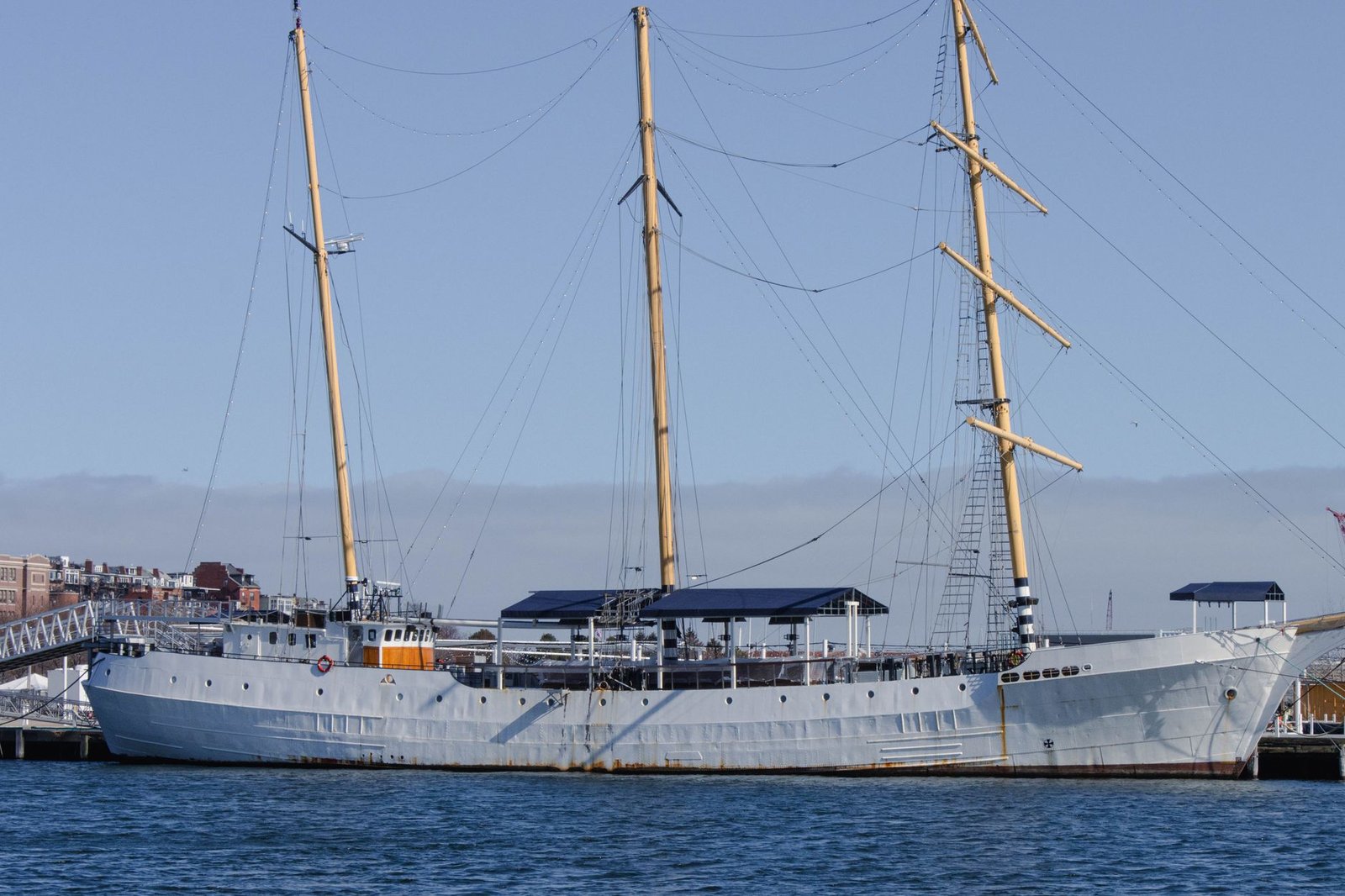
To ensure that historic schooners survive as active, sailing educational ambassadors rather than rotting waterfront relics, museum operators maintain active United States Coast Guard commercial passenger certifications. This requires rigorous non-destructive hull inspections, timber core sonic testing, modern emergency marine safety equipment integration, and advanced structural stability calculations.
Historic seaports operate working shipwright apprenticeship programs that train young men and women in the centuries-old arts of traditional ship carpentry, block-and-tackle rigging, canvas sailmaking, and coastal dead-reckoning navigation. Hundreds of high school and college students participate in immersive offshore sail-training voyages each season.
Through working historic schooner operations, participants master teamwork, oceanographic science, and maritime history, proving that centuries-old timber sailing technology continues to offer vital educational, ecological, and cultural lessons for the 21st century.
Official Public Records and Statutory Citations
The documentary evidence and administrative filings referenced in this investigation are indexed under the following public record dockets:
- National Maritime Heritage Act of 1994, 54 U.S.C. 308701 et seq.
- United States Coast Guard Regulations, 46 C.F.R. Subchapter T (Small Passenger Vessels).
- National Historic Preservation Act, 54 U.S.C. 300101 et seq.
- Secretary of the Interior’s Standards for Historic Vessel Preservation Projects with Guidelines for Applying the Standards.
Independent Oversight Outlook
The restoration and ongoing sailing operations of 19th-century wooden schooners keeps America’s maritime heritage alive on the high seas. Through dedicated historic shipyard drydocks and youth maritime training across 2026 and 2027, these magnificent timber tall ships will continue to harness the wind for generations to come.
Spotted an error? Read our corrections policy and let us know.
Keep reading
High-Country Ranching Line Camps and Notched Log Cabins Restored Across Intermountain Grazing Allotments
Historic Dimensional Limestone Quarries and Stonecutter Sheds Reclaimed Under Industrial Geo-Heritage Programs

Historic Appalachian Mountain Ballad Collections and Bluegrass Acetate Discs Preserved Under National Audio Heritage Standards