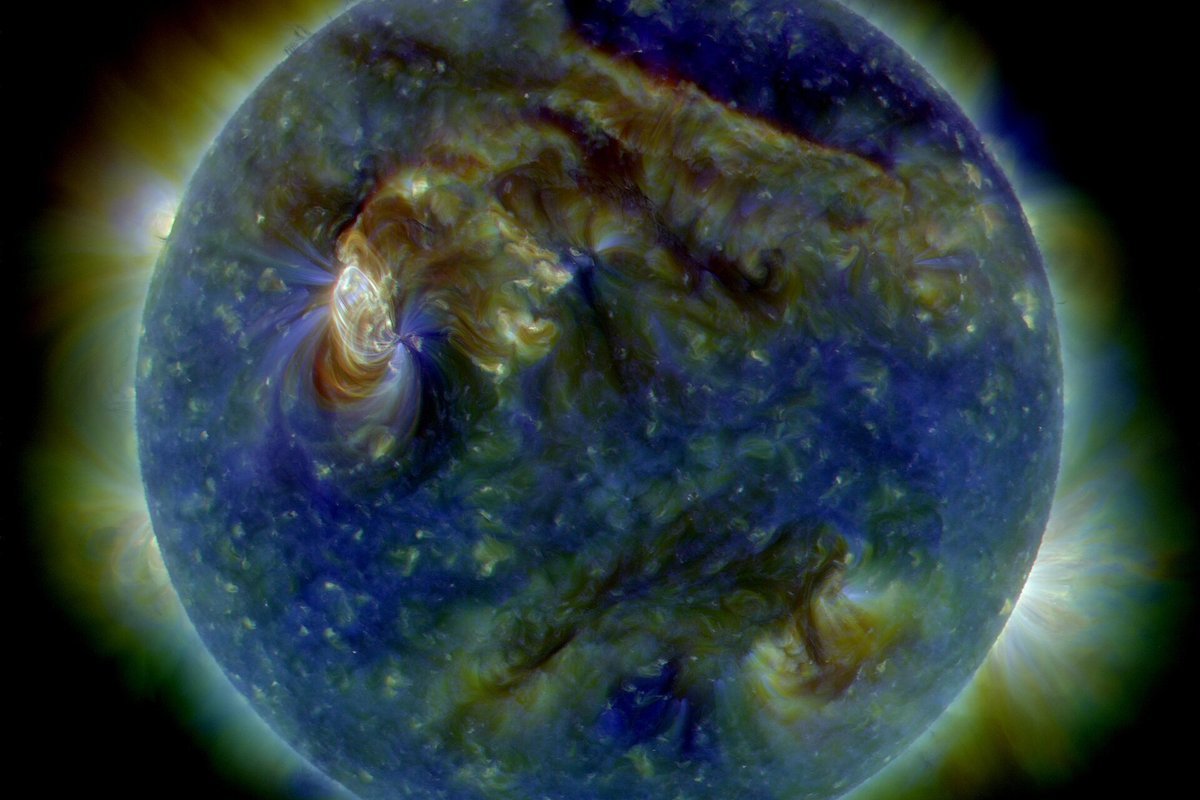
- Solar Event: An X-class solar flare erupted from active sunspot region 3842, launching a high-velocity coronal mass ejection (CME) that collided directly with Earth’s magnetosphere at over 1.8 million miles per hour.
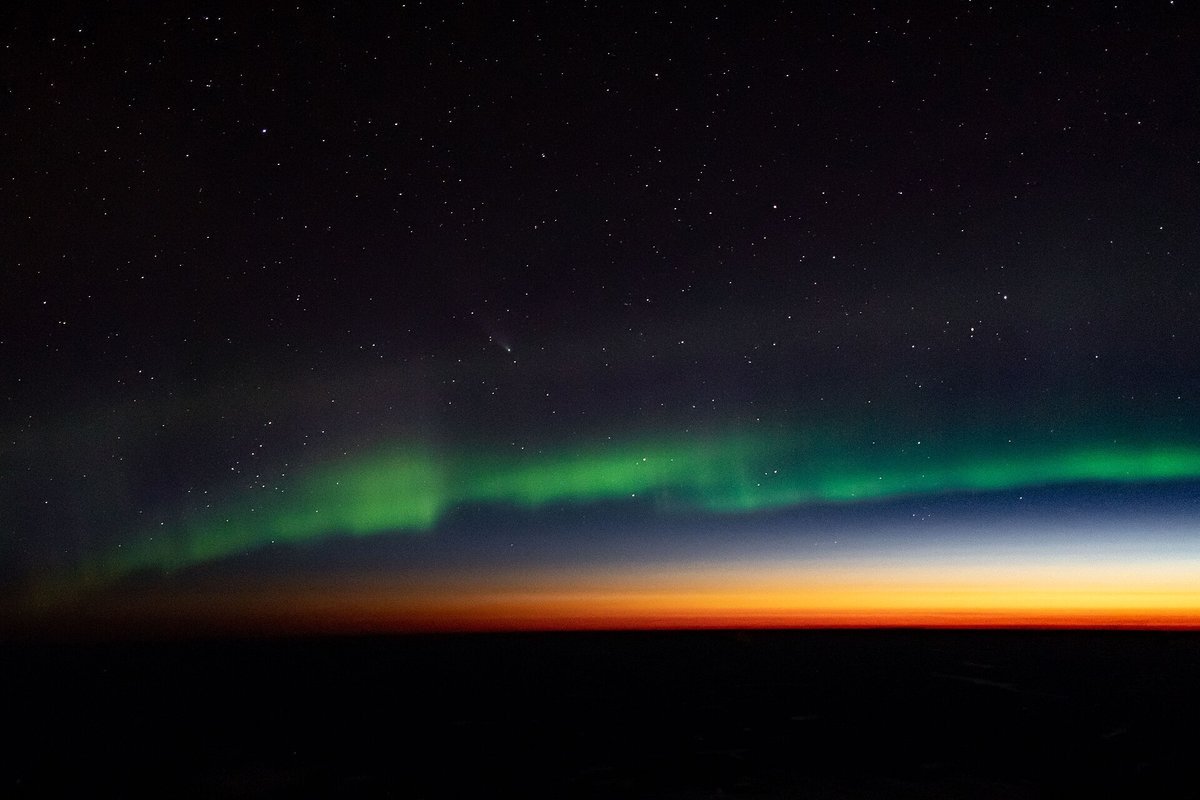
- Aurora Visibility: Severe geomagnetic storm conditions (Kp index 8) pushed the auroral oval south across the United States, producing visible auroral curtains across the Pacific Northwest, Midwest, and Northern Plains.
- Infrastructure Safeties: High-voltage electric transmission utilities and commercial satellite operators have initiated voltage stabilization and drag-compensation procedures under federal reliability standards.
BOULDER, CO — In one of the most intense space weather episodes of Solar Cycle 25, the National Oceanic and Atmospheric Administration’s (NOAA) Space Weather Prediction Center (SWPC) has issued a severe G4 Geomagnetic Storm Watch. Triggered by a fast-moving coronal mass ejection (CME) associated with an X-class solar flare, the interplanetary shockwave compressed Earth’s geomagnetic field, generating widespread ionospheric disturbances, vibrant auroral displays across mid-latitude American states, and heightened operational vigilance among critical infrastructure operators.
The geomagnetic disturbance underscores the tangible vulnerability of modern technological civilization to solar physics. As the sun progresses through the peak of its 11-year solar activity cycle, the frequency of high-energy plasma ejections increases significantly. While geomagnetic storms generate spectacular natural light displays, the underlying interaction between energetic solar protons and Earth’s magnetosphere induces geomagnetically induced currents (GIC) capable of stressing bulk electric power grids, disrupting high-frequency radio communications, and degrading satellite navigation signals.
Mechanisms of Geomagnetic Impact: Power Grids and Satellite Orbits
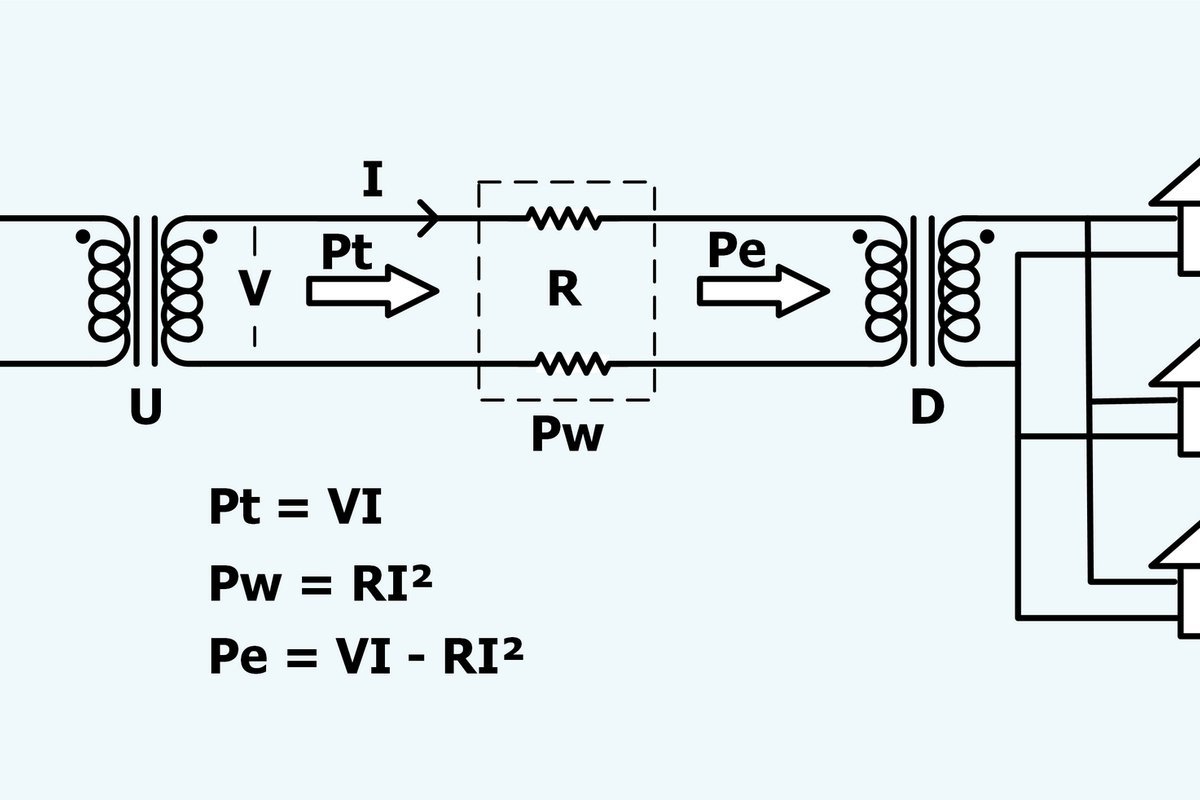
When an Earth-directed coronal mass ejection impacts the magnetopause, the rapid compression of geomagnetic field lines drives electric currents through the upper atmosphere. In accordance with Faraday’s law of induction, these atmospheric current surges induce low-frequency quasi-DC currents that flow through the planet’s crust and enter grounded electric power infrastructure:
- High-Voltage Power Transformers: Geomagnetically induced currents enter the neutral grounding points of bulk electric transmission substations. These quasi-DC currents cause magnetic core saturation in massive power transformers, generating severe harmonic distortion, excessive thermal overheating, and increased reactive power consumption that can trigger localized voltage collapse.
- Low Earth Orbit (LEO) Satellites: Solar energetic particle flux heats and expands Earth’s upper thermosphere. The resulting increase in atmospheric density dramatically elevates aerodynamic drag on thousands of commercial communications satellites, requiring orbital thruster burns to prevent premature orbital decay.
- High-Frequency (HF) Communications: Ionospheric scintillation severely degrades trans-polar and trans-oceanic aviation communications, forcing commercial airlines on northern routes to reroute flights to lower latitudes to maintain line-of-sight VHF connectivity.
- Global Navigation Satellite Systems (GNSS): Rapid electron density gradients in the ionosphere induce significant phase jitter and propagation delays in civilian GPS signals, disrupting precision agricultural guidance systems and commercial surveying operations.
NOAA Space Weather Storm Scale and Infrastructure Operations
| Storm Category | Planetary K-Index | Power Grid Impacts | Satellite & Navigation Impacts | Aurora Latitude Extent |
|---|---|---|---|---|
| G1 (Minor) | Kp = 5 | Weak power grid fluctuations | Minor impact on satellite operations | Northern Maine, Michigan, Montana |
| G2 (Moderate) | Kp = 6 | High-latitude voltage alarms | Corrective orientation commands needed | New York, Wisconsin, Washington |
| G3 (Strong) | Kp = 7 | Voltage corrections required; false alarms | Satellite surface charging; GPS intermittent | Pennsylvania, Iowa, Oregon |
| G4 (Severe) | Kp = 8 | Widespread voltage control problems; GIC risk | High drag on LEO satellites; GPS degraded | Virginia, Kansas, Northern California |
| G5 (Extreme) | Kp = 9 | Widespread grid voltage collapse / damage | Extensive satellite tracking loss; HF blackout | Florida, Texas, Southern California |
Reliability Safeguards Under NERC Reliability Standard TPL-007-4
To safeguard the North American electrical grid against catastrophic geomagnetic damage, the Federal Energy Regulatory Commission (FERC) and the North American Electric Reliability Corporation (NERC) mandate strict operational compliance with Reliability Standard TPL-007-4. Upon receiving NOAA’s G4 alert, regional transmission operators (such as PJM Interconnection, MISO, and the California ISO) implement immediate defense protocols.
Grid dispatchers redistribute generation away from remote high-voltage lines, disconnect non-critical transmission paths prone to ground loops, and activate capacitor banks to supply supplemental reactive power reserves. Thanks to precision satellite telemetry from NOAA’s DSCOVR and GOES spacecraft located at the L1 Lagrange point, grid operators received nearly 45 minutes of advance warning before the shockwave arrived, successfully averting transformer damage while millions of Americans witnessed the cosmic majesty of the aurora across the night sky.