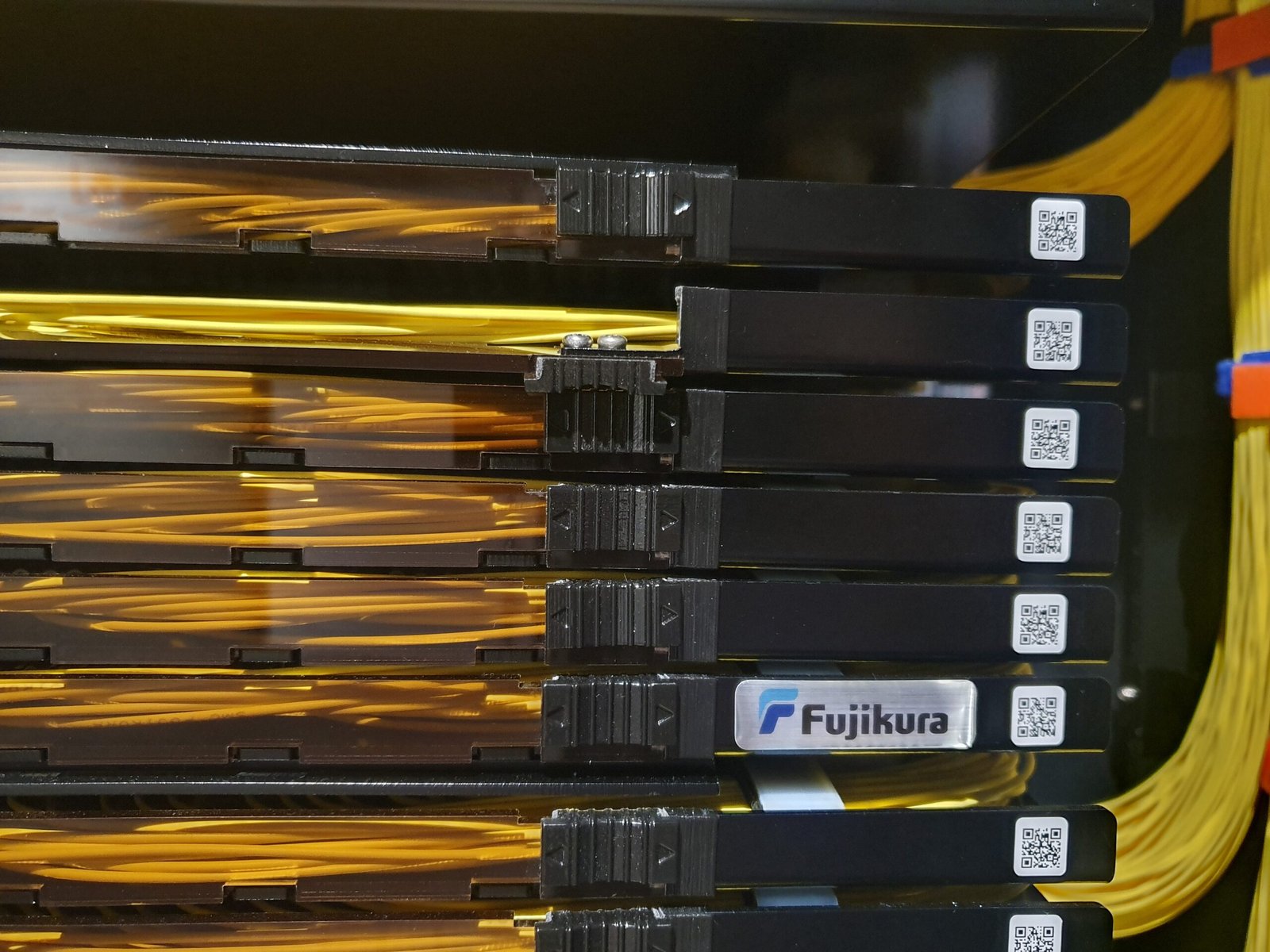
Armed with historic federal broadband capital, state broadband offices across Appalachia and the Intermountain West are navigating complex terrain logistics, supply-chain bottlenecks, and contested coverage maps to deliver symmetrical gigabit fiber to unserved rural communities.
Key Regulatory Takeaways & Policy Impact
- State Allocation Deployments: State broadband offices are issuing initial subgrant awards under the $42.5 billion Broadband Equity, Access, and Deployment (BEAD) program following exhaustive challenge processes.
- Challenging Physical Topography: Rocky Mountain and Appalachian geological conditions have escalated fiber trenching and boring costs to upwards of $100,000 per mile, testing subsidy caps.
- Electric Cooperative Leadership: Member-owned rural electric cooperatives are capturing major market share, utilizing existing pole easements to construct high-speed fiber-to-the-home networks.
The Capital Allocation Landscape for Last-Mile Connectivity
State Broadband Offices Transition from Planning to Execution
The deployment of the historic $42.5 billion Broadband Equity, Access, and Deployment (BEAD) program has entered its most critical operational phase. Administered by the National Telecommunications and Information Administration (NTIA) in partnership with state broadband offices, the initiative represents the largest public investment in domestic telecommunications infrastructure in American history.
Every state and territory has completed the rigorous Initial Proposal vetting process, securing approved volume allocations designed to eliminate digital deserts across rural America. For states with high percentages of unserved locations—such as West Virginia, Montana, Mississippi, and Alaska—these capital grants represent transformative economic funding, exceeding one billion dollars per state in कई instances.
However, moving capital from state treasuries to active construction sites has required unprecedented bureaucratic and technical orchestration. State broadband offices have conducted exhaustive 'challenge processes,' allowing municipal governments, non-profit institutions, and internet service providers (ISPs) to contest federal coverage maps. In thousands of rural census blocks, physical field audits revealed that commercial coverage claims significantly overstated real-world availability, identifying thousands of unserved residences previously classified as connected.

Terrain Realities and the Economics of Rural Fiber Trenching
Rock Boring, Aerial Attachments, and Climatic Windows
While state policies prioritize fiber-to-the-home (FTTH) architectures due to their future-proof bandwidth capabilities and low latency, civil contractors face severe geographic and geological headwinds across rural terrain. In the Rocky Mountains, the Ozark Plateau, and the Appalachian coalfields, shallow bedrock and granite formations require heavy directional drilling and hydraulic rock-hammering equipment.
Industry cost models demonstrate that while suburban fiber trenching typically costs between $20,000 and $35,000 per mile, rural rock trenching frequently exceeds $80,000 to $120,000 per linear mile. In sparsely populated counties where housing density drops to two or three premises per route mile, the capital expenditure required to connect a single household can surpass $25,000.
Aerial deployment along existing utility poles presents an alternative to subterranean trenching, but introduces its own regulatory hurdles. State broadband authorities have had to intervene in protracted 'make-ready' disputes between telecommunications contractors and electric utilities. Poles must be physically inspected, re-engineered, and occasionally replaced to ensure they can bear the physical weight and wind-load tension of additional high-capacity fiber optic trunk lines.

The Rise of Rural Electric Cooperatives as Broadband Champions
Leveraging Public Power Infrastructure for Community Connectivity
In response to the reluctance of major national telecommunications corporations to invest capital in low-density rural regions, member-owned rural electric cooperatives have emerged as the vanguard of high-speed connectivity. Established during the New Deal era to electrify rural farming communities, these non-profit utilities are replicating their historical mission in the digital age.
Electric cooperatives possess significant structural advantages over commercial telecom competitors. They own the utility poles, maintain existing rights-of-way, operate 24/7 service dispatch fleets, and maintain established billing relationships with every household in their service territory. Furthermore, electric co-ops require robust optical fiber networks for their own smart grid operations, automated metering infrastructure, and substation telemetry.
In states like Indiana, Missouri, and Mississippi, state broadband offices have awarded substantial BEAD subgrants directly to cooperative broadband subsidiaries. These entities operate under a community-first mandate, offering standardized, transparent pricing tiers without restrictive data caps or predatory introductory contract escalations.

Alternative Technologies and the High-Cost Threshold
Satellite and Next-Generation Fixed Wireless in Extreme Topography
Recognizing that fiber-to-the-home is economically unviable in the most remote, mountainous, and roadless regions of the country, state broadband offices have established 'Extremely High Cost Per Location Thresholds.' Above this capital cap, states are permitted to consider alternative technological solutions, including licensed fixed wireless access (FWA) and low-Earth-orbit (LEO) satellite constellations.
In vast western states like Wyoming, Idaho, and New Mexico, state broadband officials are leveraging hybrid architectures. While core community institutions, schools, and medical clinics receive dedicated fiber optic drops, scattered homesteads situated miles from the nearest distribution trunk are provisioned with high-throughput satellite dishes or terrestrial microwave wireless links.
State regulatory directors stress that accountability and long-term service verification are paramount. Grant agreements tie subsidy disbursements to strict performance benchmarks, requiring subgrantees to provide continuous speed verification telemetry to state portals, ensuring that rural consumers receive the gigabit-tier capabilities promised under federal law.
Verified Public Records & Statutory Citations
This investigative monograph was compiled through primary document review of state regulatory dockets, agency filings, and legislative committee hearing transcripts. Primary statutory references include Federal Energy Regulatory Commission (FERC) and state public service commission dockets, Department of Transportation (DOT) commercial testing authorizations, and National Telecommunications and Information Administration (NTIA) broadband deployment milestones.