- Federal Capital Infusion: Nearly $3 billion in Drinking Water State Revolving Fund allocations released to municipal utilities specifically for lead pipe inventory verification and physical pipe extraction.
- Strict Contaminant Threshold: Lowered the federal lead action level from 15 parts per billion (ppb) down to 10 ppb, compelling utilities to implement advanced corrosion control upon detection.
- 10-Year Replacement Mandate: Requires community water systems to replace 100% of lead and galvanized-requiring-replacement (GRR) service lines under their operational control within a 10-year regulatory window.
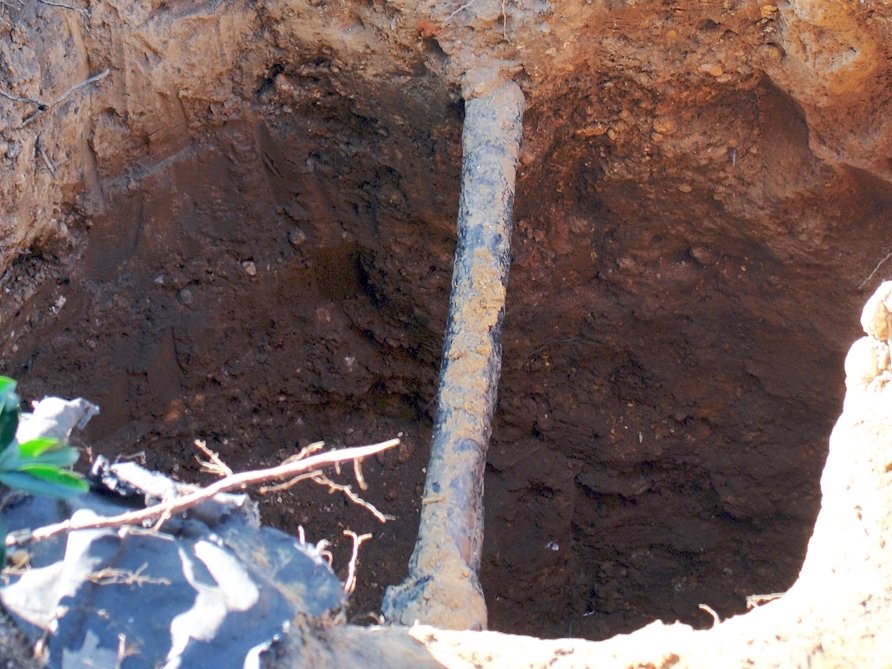
WASHINGTON — Advancing one of the most comprehensive public health infrastructure initiatives in modern American governance, the U.S. Environmental Protection Agency (EPA) has mobilized nearly $3 billion in targeted federal capital to accelerate the nationwide removal of toxic lead drinking water pipes. Operating under the finalized Lead and Copper Rule Improvements (LCRI) pursuant to the Safe Drinking Water Act (42 U.S.C. § 300g-1), federal regulators have established an enforceable nationwide mandate requiring community water utilities to identify, excavate, and replace all lead service lines within a 10-year compliance horizon.
The regulatory framework addresses a century-old environmental justice challenge. Despite a 1986 federal ban on the installation of lead plumbing, an estimated 9.2 million legacy lead service lines remain embedded in subterranean utility easements across the United States, disproportionately impacting older industrial cities across the Midwest, Mid-Atlantic, and Northeast. By coupling direct grant and loan subsidies from the Bipartisan Infrastructure Law with strict chemical performance standards, the EPA is compelling municipal utilities to eliminate lead at the source rather than relying exclusively on chemical orthophosphate corrosion inhibitors.
The Technical Architecture of LCRI: Lowered Action Levels and Inventory Audits
The finalized LCRI establishes sweeping technical upgrades over the legacy 1991 regulatory apparatus, introducing four foundational engineering and public health requirements:
- Reduction of the Lead Action Level: The EPA has codified a strict reduction in the regulatory lead action level from 15 parts per billion (μg/L) down to 10 parts per billion. Water systems exceeding this lower threshold must immediately notify consumers, distribute certified National Sanitation Foundation (NSF) 53 water filters, and accelerate annual replacement rates.
- Universal Service Line Inventories: Community water systems are legally required to maintain publicly accessible, verified baseline service line inventories categorizing every public and private lateral as lead, copper, galvanized requiring replacement (GRR), or non-lead.
- Ban on Partial Pipe Replacements: The federal rule strictly prohibits the hazardous practice of partial lead pipe replacement—in which a utility replaces only the public portion of a pipe while leaving the private section intact, a practice known to cause catastrophic lead spikes due to galvanic corrosion.
- Rigorous Testing Protocols: Mandates the adoption of sequential liter sampling, compelling utilities to analyze the first through fifth liter of tap water to capture water that sat directly within the lead service lateral rather than interior building copper.
Regulatory Standards and Infrastructure Metrics Under EPA LCRI
| Regulatory Parameter | Legacy 1991 Lead & Copper Rule | Finalized LCRI Modernization | Impact on Water Systems |
|---|---|---|---|
| Lead Action Level | 15 parts per billion (ppb) | 10 parts per billion (ppb) | Triggers mandatory public health intervention earlier |
| Replacement Horizon | Open-ended / Conditional | Strict 10-Year Mandatory Schedule | Requires minimum average 10% annual extraction |
| Partial Lead Replacements | Permitted under utility easements | Codified Nationwide Ban | Requires full public-private lateral extraction |
| Consumer Notification | 60-day delayed reporting window | 24-hour mandatory public notice | Immediate delivery of certified NSF-53 filters |
| Federal Financing Pool | Local municipal ratepayer bonding | $3 Billion 2026 SRF Grant Allocation | Direct principal forgiveness for disadvantaged towns |
Guidance Protocols and Municipal Implementation Support
To assist small and medium-sized water systems in meeting these aggressive milestones, the EPA released dual operational guidelines: the Service Line Inventory Guidance and the Property Access and Private Lateral Protocols. These operational playbooks outline predictive statistical modeling, vacuum excavation techniques, and legal templates that enable municipal utilities to secure homeowner consent for private property utility trenching without prolonged civil litigation.
Through state revolving funds, state water boards are directing priority capital to economically overburdened municipalities, providing 100% principal forgiveness for utility projects that service low-income households. By targeting the subterranean conduits that deliver drinking water to millions of school children and residential neighborhoods, the EPA LCRI represents a transformative generational commitment to environmental health and civic infrastructure durability.