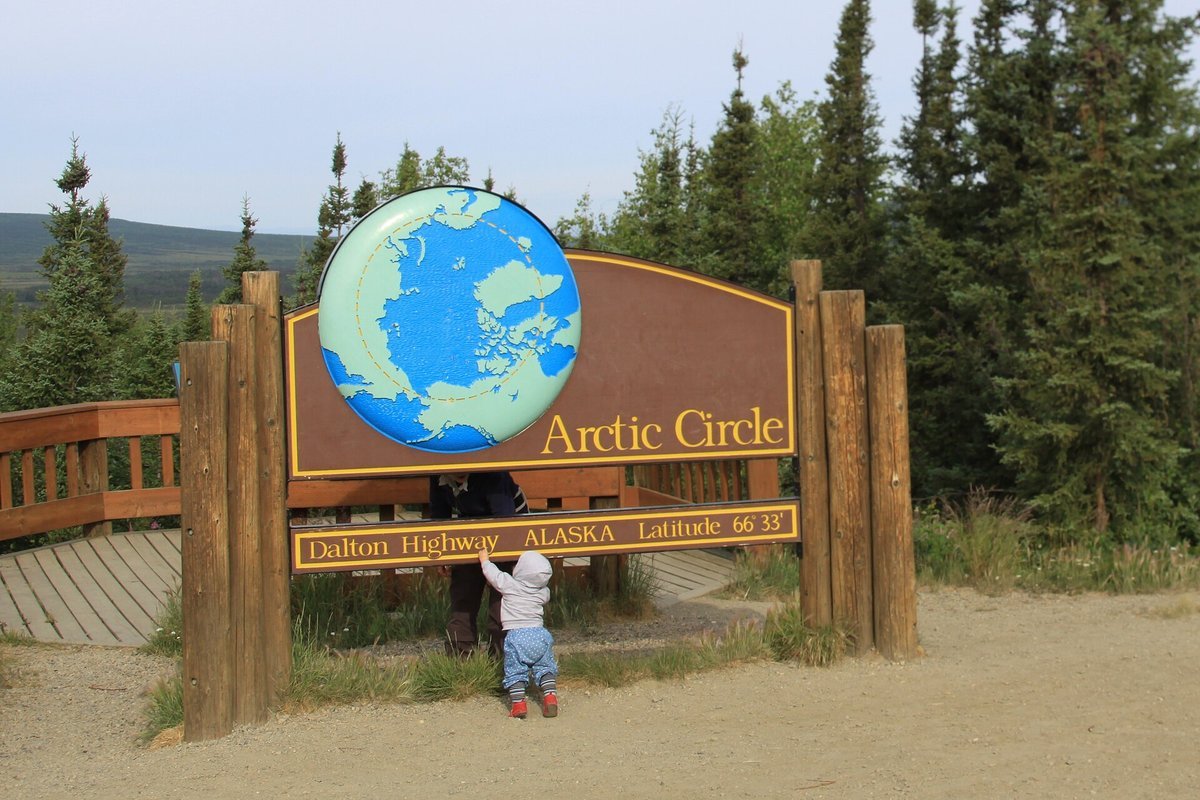
Spanning over 663,000 square miles across extreme subarctic and polar latitudes, Alaska confronts the most severe cryospheric infrastructure crisis in the United States. Nearly 85 percent of the state’s geographic landmass is underlain by permafrost—perennially frozen ground consisting of rock, mineral soil, and ice that has remained below 32 degrees Fahrenheit for thousands of years. As Arctic surface temperatures warm at more than triple the global average rate, permafrost degradation is causing catastrophic ground subsidence, structural warping of highway corridors, and the rapid destabilization of civil aviation runways and public buildings. In response, the Alaska Department of Transportation and Public Facilities (DOT&PF), the U.S. Army Corps of Engineers (USACE), and Arctic geotechnical engineers are deploying cutting-edge thermal engineering: utilizing passive two-phase thermosyphons, air-convective rock embankments, and insulated subgrades to refreeze the ground and preserve vital transport networks like the James W. Dalton Highway. Concurrently, remote Alaska Native coastal villages face immediate climate displacement, necessitating unprecedented government-coordinated community relocation initiatives.
Permafrost Geotechnics: Thermal Dynamics and the Mechanics of Thaw Settlement
To understand the vulnerability of Arctic infrastructure, engineers distinguish between temperature, ice content, and mechanical soil composition. In northern continuous permafrost zones—such as the Arctic North Slope—permafrost can extend to depths exceeding 1,000 feet, maintaining core temperatures below 20 degrees Fahrenheit. Conversely, across interior and southwestern Alaska, permafrost is discontinuous, warmer (often within one or two degrees of freezing), and characterized by massive subterranean ice wedges and ice lenses.
The mechanical hazard occurs primarily in “ice-rich” soils. When frozen, ice-rich silt and clay possess structural compressive strength comparable to solid concrete, capable of supporting heavy commercial structures, bridge piers, and pipeline corridors. However, when the thermal equilibrium is disrupted—either through ambient atmospheric warming or the conduction of anthropogenic heat from heated buildings and asphalt roadways—the interstitial ice melts into liquid water.
Upon melting, the structural cohesion collapses. Soil volume can decrease by up to 50 percent in a process known as thaw settlement, creating uneven sinkholes, thermokarst slumps, and ground fissures. Furthermore, excess water saturated within thawed silt creates a frictionless slurry with zero shear strength, causing structural foundations to sink, highway pavements to buckle, and foundation pilings to shear off under severe differential settlement stresses.
Thermosyphon Engineering: Passive Heat Extraction and Subgrade Refrigeration
To counteract foundation thaw beneath critical structures, geotechnical engineers rely on passive two-phase thermosyphons—a remarkable thermodynamic technology invented in Alaska and deployed extensively across polar civil engineering projects. A thermosyphon is a sealed, pressure-tight steel tube charged with a working fluid (typically pressurized liquid carbon dioxide or anhydrous ammonia) that operates without mechanical pumps, electrical power, or moving parts.
The system operates on natural thermodynamic phase-change cycles between an evaporator section buried deep in the permafrost foundation and a finned condenser radiator exposed to the cold subarctic air above ground:
Subsurface Vaporization: During Arctic winter months, when ambient air temperatures drop far below subterranean ground temperatures, the liquid working fluid at the bottom of the buried pipe absorbs heat from the surrounding permafrost, causing the fluid to boil and vaporize.
Buoyant Ascent and Condensation: The warm vapor expands and rises buoyantly to the finned condenser unit above the surface. Exposed to freezing sub-zero winds, the vapor releases its latent heat into the atmosphere, condenses back into liquid droplets along the pipe walls, and flows gravitationally down the interior walls back to the bottom of the evaporator.
This continuous passive thermal siphon extracts thermal energy out of the earth and radiates it into the Arctic atmosphere throughout the winter, super-cooling the foundation soil down to temperatures well below ambient summer thaw thresholds. By forming an expansive bulb of frozen ground around support pilings, thermosyphons maintain subgrade structural integrity through summer months when the condenser is dormant, ensuring that structural loads remain anchored in frozen bedrock.
| Infrastructure Asset | Geotechnical Challenge | Engineering Intervention | Governing Agency / Entity | Capital Investment & Status |
|---|---|---|---|---|
| James W. Dalton Highway (AK-11) | Severe thermokarst buckling & active-layer subsidence | Extruded polystyrene insulation & convective rock embankments | Alaska DOT&PF / Federal Highway Administration (FHWA) | $180M multi-phase corridor reconstruction |
| Trans-Alaska Pipeline System (TAPS) | Thaw settlement beneath 800 miles of oil conduit | Over 120,000 passive two-phase thermosyphon pilings | Alyeska Pipeline Service Company / PHMSA | Continuous private maintenance & heat-pipe replacements |
| Utqiaġvik Coastal Defense Wall | Storm surge erosion & shore-fast ice retreat | Engineered 5-mile rock armor revetment seawall | U.S. Army Corps of Engineers (USACE) / North Slope Borough | $320M authorized federal civil works project |
| Newtok / Mertarvik Community Relocation | Ninglick River bank erosion consuming village footprint | Pioneering entire tribal village relocation to basalt bedrock | Newtok Village Council / Alaska BIA / Denali Commission | $150M multi-agency intergovernmental relocation |
| Rural Airport Runway Stabilization (Bethel/Kotzebue) | Asphalt solar absorption thawing subgrade permafrost | Thermosyphon loops & high-albedo reflective runway sealants | Alaska DOT&PF Statewide Aviation / FAA | $65M runway rehabilitation and subgrade cooling |
Transportation Corridor Modernization: The Dalton Highway Lifeline
Nowhere is permafrost engineering more vital than along the 414-mile James W. Dalton Highway. Stretching from north of Fairbanks across the Arctic Circle and the Brooks Range to Deadhorse and Prudhoe Bay, the Dalton Highway is the sole land-based freight supply conduit supporting the Trans-Alaska Pipeline and the multi-billion-dollar North Slope energy fields. Heavy commercial trucks transport drilling equipment, modular building units, and essential supplies year-round across mountainous and tundra terrain.
To prevent the thermal mass of the dark asphalt highway from radiating solar heat downward and thawing the underlying ice wedges, Alaska DOT&PF has engineered innovative corridor stabilization techniques. Civil engineers install high-compressive-strength extruded polystyrene (XPS) rigid foam insulation boards buried beneath the gravel sub-base, creating a permanent thermal barrier between seasonal surface heat and the permafrost below.
In high-risk sections, roadbeds are constructed using Air Convection Embankments (ACE). These embankments utilize open-graded, coarse crushed rock without fine soil particles. During winter, heavy cold air sinks down through the rock voids while warmer subsurface air rises out, passively ventilating heat from the core of the highway embankment and maintaining a frozen structural core throughout the summer months.
Coastal Native Community Displacement and Relocation: The Case of Newtok and Kivalina
While engineered roadways and pipelines benefit from substantial capital backing, remote Alaska Native communities confront existential threats from climate-driven environmental displacement. Over thirty indigenous coastal villages—primarily Yup’ik, Cup’ik, and Iñupiat communities—are classified by the federal Government Accountability Office (GAO) as facing imminent destruction from combined permafrost thaw, sea ice loss, and coastal erosion.
Historically, coastal shore-fast sea ice formed in early October, acting as a natural physical buffer that prevented autumn Arctic storm surges and violent ocean swells from battering unconsolidated tundra bluffs. With sea ice forming weeks later in the season, powerful autumn storms now pound exposed permafrost shorelines directly. Combined with thermal warming of coastal bluffs, entire sections of coastline are slumping into the ocean at rates exceeding 80 feet per year.
The Yup’ik village of Newtok on the Ninglick River exemplifies both the devastation and the immense logistical complexity of community relocation. With river erosion advancing to within feet of community water supplies, residential homes, and the village school, Newtok completed a historic relocation to Mertarvik—a new townsite situated nine miles away on stable volcanic basalt rock on Nelson Island. Supported by the Denali Commission, FEMA, and the Bureau of Indian Affairs, Mertarvik represents the first completed, federally supported community relocation in modern American history, setting precedent for other imperiled villages including Kivalina, Shaktoolik, and Shishmaref.

Federal Policy Coordination and the Future of Arctic Resiliency
To confront the escalating scale of cryospheric degradation, Alaska’s infrastructure funding has undergone unprecedented federal and state restructuring. Through the federal Infrastructure Investment and Jobs Act (IIJA) and the Denali Commission Act authorizations, hundreds of millions of dollars in dedicated resilience funding have been directed to Arctic civil works, shoreline armoring, and climate adaptation.
Simultaneously, the University of Alaska Fairbanks (UAF) Institute of Northern Engineering and the Cold Regions Research and Engineering Laboratory (CRREL) are pioneering advanced satellite interferometric synthetic aperture radar (InSAR) mapping. InSAR technology tracks millimeter-scale ground surface movement across thousands of square miles of Arctic terrain, allowing engineers to identify developing thaw slumps and reinforce vulnerable infrastructure months before visible structural failures occur.
Alaska’s ongoing battle with permafrost degradation underscores the profound challenges of engineering in the changing circumpolar North. By uniting thermodynamic innovation like passive thermosyphons, advanced geotechnical corridor insulation, and culturally responsive community relocation models, the Last Frontier is developing the vital engineering blueprints required to defend civil infrastructure in extreme environments.