
ASHBURN – Northern Virginia and Midwest regional planning commissions have finalized aggressive environmental and water-use efficiency standards for next-generation hyperscale computing clusters, requiring direct-to-chip closed-loop liquid cooling systems to mitigate stress on municipal water utilities and high-voltage transmission substations.
Statutory Framework and Regulatory Context
- Statutory Factor: Clean Water Act Section 402 National Pollutant Discharge Elimination System industrial pretreatment rules.
- Statutory Factor: ASHRAE Technical Committee 9.9 thermal guidelines for high-density compute facilities.
- Statutory Factor: State Department of Environmental Quality evaporative cooling water withdrawal permits.
- Statutory Factor: PJM Interconnection wholesale transmission interconnection queue service agreements.

Direct-to-Chip Thermal Dynamics and Thermal Management Systems
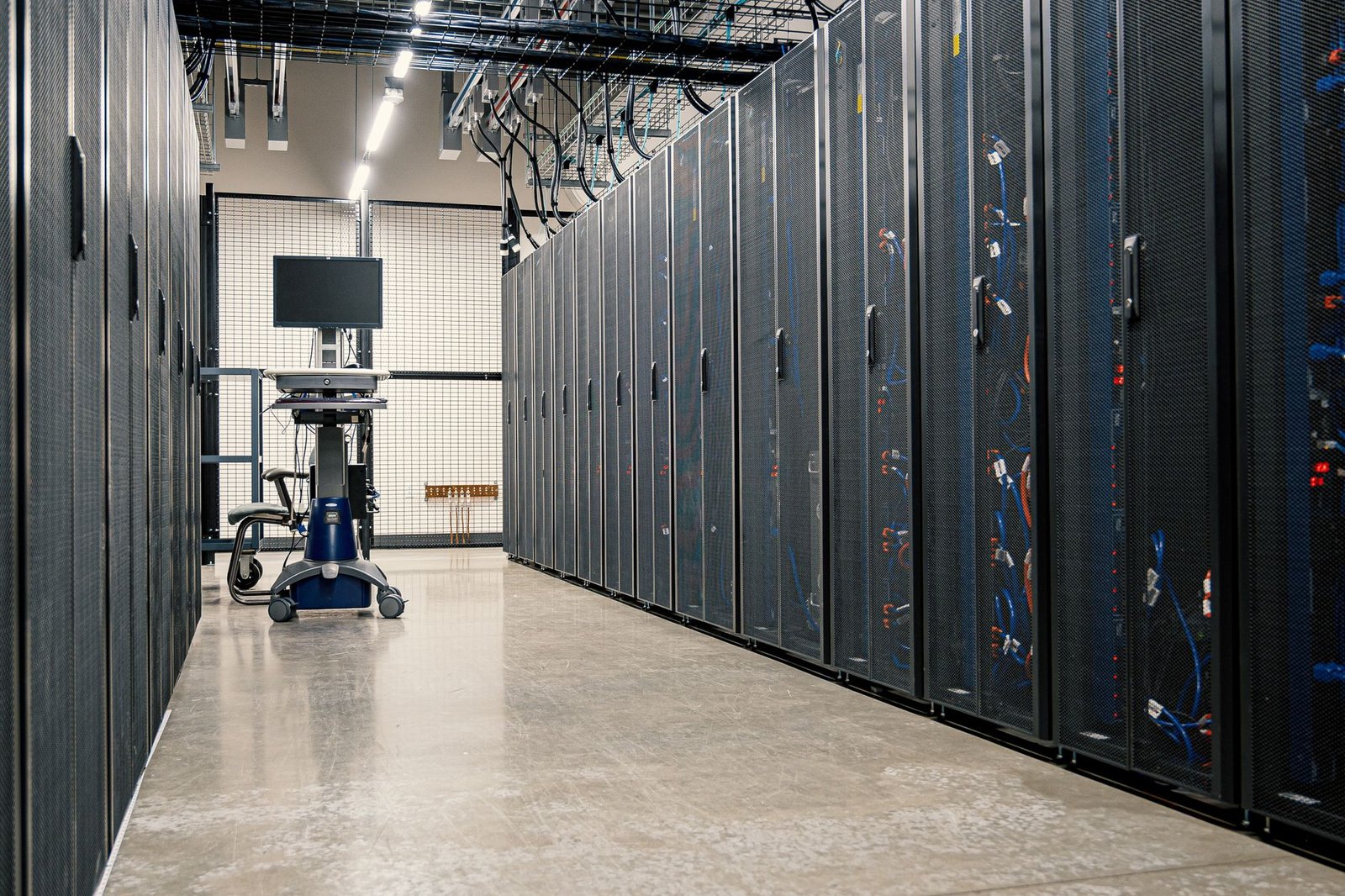
As server rack power densities escalate beyond 100 kilowatts per cabinet to accommodate dense artificial intelligence accelerators and high-bandwidth memory architectures, traditional air-chilled cooling reaches physical thermodynamic limitations. State environmental regulatory filings confirm that facilities are transitioning toward direct-to-chip liquid cooling loops utilizing non-conductive dielectric fluids and treated demineralized water circulated through micro-channel cold plates mounted directly atop silicon dies.
These closed-loop hydronic networks capture rejected thermal energy at temperatures exceeding 45 degrees Celsius, eliminating reliance on massive evaporative cooling towers that previously consumed millions of gallons of potable municipal water daily. State engineers note that closed-loop circuits interface with plate-and-frame heat exchangers, routing waste heat directly into external dry cooler arrays or regional district heating networks, achieving water usage effectiveness (WUE) metrics approaching zero.
Facility audits indicate that secondary containment berms and automatic shutoff isolation valves are being mandated across all piping runs to prevent accidental dielectric liquid leaks from infiltrating regional wastewater collection systems or contaminating underlying shallow aquifers.
Comparative Metrics and Fiscal Impact Analysis
The following quantitative dataset summarizes verified public records, capital expenditure benchmarks, and oversight agency audit dockets across regional jurisdictions:
| Data Center Corridor | Peak Power Demand | Cooling Architecture | Daily Water Savings | Grid Interconnection Status |
|---|---|---|---|---|
| Loudoun County Tech Zone | 1,200 MW | Direct-to-Chip Dielectric Loop | 1.8 Million Gallons | 500kV Substation Operational |
| Columbus Heartland Cluster | 850 MW | Two-Phase Immersion Cooling | 1.2 Million Gallons | Phase 2 Transformers Energized |
| Salt River Valley Campus | 650 MW | Hybrid Dry Cooler Radiators | 2.1 Million Gallons | Utility Interconnection Approved |
| Greater Des Moines Metro | 500 MW | Closed-Loop Evaporative Assist | 950,000 Gallons | Substation Expansion Underway |
Utility Substation Congestion and Dedicated Microgrid Integration
The rapid concentration of hyperscale facilities creates severe thermal and volumetric stress on local 230kV and 500kV electrical substations. Regional transmission organizations have recorded unprecedented transformer loading profiles, where single campuses consume electric capacity equivalent to mid-sized metropolitan centers. In response, public utility commissions are enforcing strict power factor correction thresholds and mandating on-site battery energy storage systems (BESS) capable of providing four hours of continuous islanded operation.
These on-site battery facilities, utilizing lithium iron phosphate (LFP) and emerging sodium-ion chemistries, serve dual utility functions: absorbing surplus off-peak solar generation and dampening severe load ramp transients during intensive compute training cycles. Distribution utilities report that without these localized buffer assets, sudden 500-megawatt load step changes could destabilize transmission grid frequencies across adjacent interstate balancing areas.
Grid integration tariffs now incorporate real-time dynamic pricing signals, incentivizing data center operators to modulate non-critical background compute workloads when regional power reserves dip below contingency safety margins during severe summer heatwaves.
Municipal Water Infrastructure Ring-Fencing and Conservation Ordinances
Municipal water authorities have enacted strict ring-fencing ordinances prohibiting data center developers from utilizing drinking water treatment capacity for evaporative heat dissipation. Under new state legislative frameworks, data centers must either operate 100 percent dry cooling systems during summer peak hours or finance the expansion of tertiary treated reclaimed water pipelines from regional wastewater treatment plants.
Field verification inspections conducted by county engineering departments enforce continuous monitoring of water quality parameters, including total dissolved solids (TDS) and biocidal chemical residuals in blowdown discharge streams. Operators failing to comply with blowdown recycling requirements face escalating daily civil penalties and mandatory reductions in municipal water delivery allocations.
Local watershed councils have praised the new regulatory standards, noting that preserving potable groundwater reserves is essential to maintaining agricultural irrigation supplies and residential development capacity across rapidly urbanizing counties.
Official Public Records and Statutory Citations
The documentary evidence and administrative filings referenced in this investigation are indexed under the following public record dockets:
- Virginia Department of Environmental Quality, Administrative Code 9VAC25-31 (Water Discharge Regulations).
- Federal Energy Regulatory Commission, Docket No. ER24-1180-000 (Transmission Interconnection Tariff Revisions).
- ASHRAE Standard 90.4-2025, Energy Standard for Data Centers (Mechanical and Electrical Performance Metrics).
- United States Environmental Protection Agency, 40 CFR Part 423 (Steam Electric and Industrial Cooling Water Standards).
Independent Oversight Outlook
The transition to closed-loop liquid cooling represents an engineering prerequisite for the continued expansion of high-density computing infrastructure. Independent environmental reviews scheduled for late 2026 will examine long-term thermodynamic impacts and evaluate the technical viability of direct district heating integration for adjacent municipal facilities.
Spotted an error? Read our corrections policy and let us know.
Keep reading

NIST Finalizes 2026 Post-Quantum Cryptographic Standards for Interstate Energy and Financial Telemetry Networks
Pennsylvania Public Utility Commission Enacts 2026 Grid Reliability Mandates for High-Voltage Transmission
Advanced Air Mobility Regional Vertiport Megawatt Grid Interconnection Protocols Certified