Stretching across 12,000 square miles of coastal barrier islands, tidal salt marshes, and maritime forests from Pender County, North Carolina, southward through South Carolina and Georgia to St. Johns County, Florida, the Gullah Geechee Cultural Heritage Corridor encompasses one of the most distinctive cultural ecosystems in the United States. Established by the United States Congress under Public Law 109-338, the federal corridor recognizes the direct descendants of enslaved Africans from West and Central Africa who developed a distinct Creole language, rich spiritual and artistic traditions, and specialized agrarian and coastal navigation knowledge. Today, the preservation of Gullah Geechee living culture is inextricably tied to ancestral land ownership. However, widespread legal vulnerabilities stemming from fractionated “heirs’ property”—land passed through generations without probated wills—have historically exposed Sea Island families to predatory partition lawsuits, tax lien foreclosures, and rapid displacement by luxury resort developments. Through the widespread adoption of the Uniform Partition of Heirs Property Act (UPHPA), targeted land retention trusts, and historic conservation easements, Southeastern states and community advocates are securing legal titles and defending the cultural heritage of the coastal Lowcountry.
Historical Origins: The Sea Islands Sanctuary and Cultural Preservation
The distinctive preservation of Gullah Geechee culture was forged by geographic isolation and historical agricultural economics. During the eighteenth and nineteenth centuries, coastal plantation owners across the Sea Islands specialized in the production of labor-intensive cash crops, primarily Carolina Gold rice, Sea Island long-staple cotton, and indigo. Planters deliberately sought enslaved laborers from the “Rice Coast” of West Africa—encompassing modern Senegal, Sierra Leone, Liberia, and Ghana—due to their sophisticated knowledge of tidal hydraulics, levee construction, and rice cultivation.
Because the subtropical Lowcountry marshlands were endemic to malaria and yellow fever, European plantation owners frequently fled inland during the summer months, leaving enslaved populations relatively isolated under an enslaved “driver” system. This geographic isolation allowed African cultural traditions to survive with remarkable vitality. Following the Civil War and the issuance of General William Tecumseh Sherman’s historic Special Field Orders No. 15 in 1865, thousands of newly freed families acquired and pooled collective capital to purchase ancestral land across St. Helena, Hilton Head, Sapelo, and Daufuskie Islands, establishing self-reliant agricultural and oystering communities.
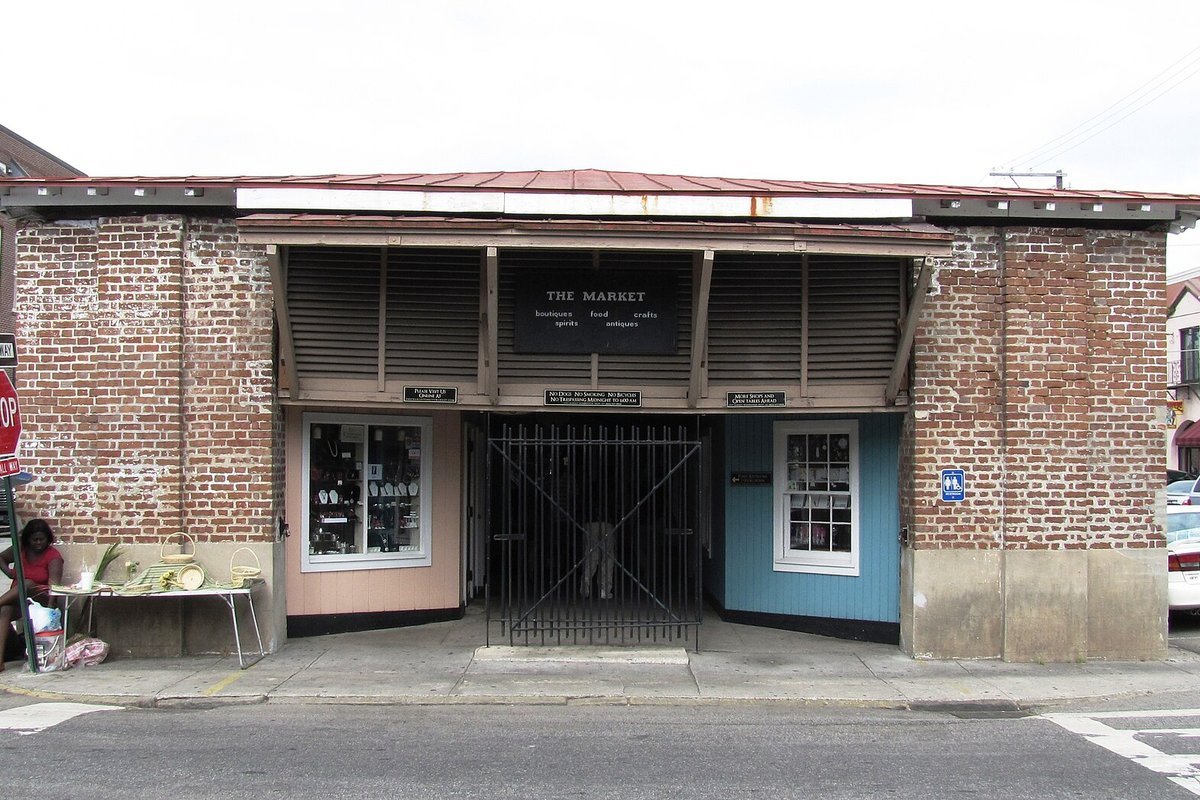
Across generations, Gullah Geechee artisans preserved living cultural traditions that continue to define the Lowcountry. Master sweetgrass basket weavers meticulously handcraft coiled baskets utilizing sweetgrass (Muhlenbergia capillaris), longleaf pine needles, and split palmetto fronds—an unbroken artistic tradition tracing directly to West African coiled basketry. However, rapid commercial resort development, gated golfing communities, and escalating coastal real estate valuations have placed unprecedented financial and spatial pressure on historic Gullah Geechee settlements.
The Heirs’ Property Crisis: The Legal Mechanics of Fractionated Title Vulnerability
The foundational threat to Gullah Geechee land ownership is the legal structure known as “heirs’ property.” When an individual dies intestate—without a legally executed and probated will—their real estate passes automatically to their legal heirs as “tenants in common” under state intestacy statutes. Unlike standard private property where ownership is delineated by explicit acreage or deed boundaries, tenants in common each own an undivided, fractional interest in the entire parcel.
Across the rural South, systemic racial discrimination in the legal system, lack of access to affordable estate attorneys, and historical distrust of judicial probate courts led generations of Gullah Geechee landowners to pass down ancestral properties informally. Over three, four, or five generations, a single 20-acre parcel originally owned by a great-grandparent can become legally fractionated among dozens, or even hundreds, of living descendants—many of whom reside in distant northern or western cities and have never visited the land.
Under traditional common-law partition statutes, this fractionated ownership created an catastrophic legal vulnerability. Any single co-tenant, regardless of how minute their fractional share (even one percent), possessed the absolute statutory right to file a lawsuit in state court seeking a “partition by sale.” Real estate developers and speculative investors exploited this loophole by purchasing a small fractional share from a distant, uninvolved heir. The outside investor would then immediately petition the local probate court to force an open-market sheriff’s auction of the entire multi-acre family property, acquiring historically invaluable coastal waterfront land for pennies on the dollar, permanently dispossessing resident family members.

| Jurisdiction / State | Statutory Safeguard | Heirs’ Property Legal Reform | Institutional Partner / Resource | Community Impact & Resolution Scope |
|---|---|---|---|---|
| South Carolina | Clementa C. Pinckney UPHPA (S.C. Code Ann. § 15-61-310) | Mandatory open-market appraisal & family right of first refusal | Center for Heirs’ Property Preservation (Charleston) | Over $20M in clear title resolved; hundreds of family tracts secured |
| Georgia | Georgia UPHPA (O.C.G.A. § 44-6-180 et seq.) | Judicial preference for physical partition; buyout mechanisms | Georgia Heirs Property Law Center (Atlanta) | Legal representation across coastal McIntosh and Glynn counties |
| North Carolina | North Carolina UPHPA (N.C. Gen. Stat. § 46A-80) | Independent broker sales; relocation protection for resident heirs | Land Loss Prevention Project / Conservation Trust for NC | Protects multi-generational agricultural tracts in coastal plain |
| Florida | Florida UPHPA (Fla. Stat. § 64.201 et seq.) | Equitable appraisal & court-ordered mediation protocols | St. Johns County Legal Aid / Gullah Geechee Commission | Defends historic settlements in St. Augustine and surrounding islands |
| Federal Level | Gullah Geechee Cultural Heritage Act (P.L. 109-338) | National Heritage Area designation & federal technical grants | National Park Service / Gullah Geechee Heritage Commission | Federal recognition across 12,000 sq mi four-state corridor |
Legislative Reform: The Uniform Partition of Heirs Property Act (UPHPA)
To eliminate predatory partition exploitation, legal reform coalitions—championed by the Uniform Law Commission, the American Bar Association, and grassroots advocacy organizations—drafted the Uniform Partition of Heirs Property Act (UPHPA). South Carolina enacted this landmark legislation in 2016, naming it the Clementa C. Pinckney Uniform Partition of Heirs Property Act in honor of the late state senator and pastor of Mother Emanuel A.M.E. Church.
The UPHPA establishes rigorous statutory procedural safeguards that dismantle the predatory forced-auction mechanism:
Mandatory Independent Appraisal: If an outside party or co-tenant files for a partition sale, the court must appoint a certified, independent real estate appraiser to determine the fair market value of the entire property, eliminating artificially depressed auction prices.
Right of First Refusal Buyout: The law grants the remaining family co-tenants a statutory right of first refusal. The resident heirs have the legal right to purchase the fractional interest of the petitioning party at the court-determined fair market price, halting the forced sale and keeping the land within the family.
Preference for Physical Partition (Partition in Kind): The statute legally mandates that courts favor physically dividing the land among co-tenants rather than selling it, unless physical division would cause severe economic prejudice to the owners as a whole.
Open-Market Commercially Reasonable Sale: If a sale is deemed unavoidable, the property must be marketed through a licensed real estate broker at fair market value, rather than auctioned on county courthouse steps, maximizing the economic return for the family.
Institutional Interventions: The Center for Heirs’ Property Preservation and Legal Clearinghouses
While legislative reforms establish legal protections, families require specialized, pro bono legal representation to untangle complex multi-generational title webs. In Charleston, the Center for Heirs’ Property Preservation (CHPP) has emerged as the premier non-profit legal and forestry educational institution serving the Lowcountry.
Attorneys and title specialists at CHPP conduct meticulous genealogical research, tracing probate court records, family bibles, and cemetery inscriptions to reconstruct complete family trees. They organize family meetings, draft formal family land agreements, and file judicial quiet title actions in county courts of common pleas. By clearing cloudy titles and securing legal, probated deeds, CHPP enables families to access federal agricultural conservation grants, obtain building permits to repair historic homes, and defend their land against tax sales.
Furthermore, CHPP provides sustainable forestry education. Through the Sustainable Forestry and African American Land Retention (SFLR) initiative, landowners are assisted in managing overgrown forest acreage into certified working timberland. By sustainably thinning pine stands and harvesting high-value timber, Gullah Geechee families generate recurring agricultural income that pays annual county property taxes, turning historically vulnerable land into a perpetual wealth-building asset.
Conservation Easements and Cultural District Zoning: Preserving Historic Island Footprints
Complementing private title resolution, municipal and county governments across the Lowcountry have recognized the necessity of protective land-use zoning. On St. Helena Island—the largest contiguous center of rural Gullah Geechee culture in South Carolina—the Beaufort County Council established the Cultural Protection Overlay (CPO) district.
Under the CPO zoning ordinance, high-density suburban tract housing, gated residential resort communities, and commercial golf courses are strictly prohibited across the island. The overlay mandates low-density agricultural zoning and protects traditional rural cottage industries, ensuring that working families are not taxed out of their ancestral homes by gentrification. In 2023 and 2024, when commercial developers sought to carve out exemptions to construct luxury golf resorts on Pine Island, intense civic mobilization by the St. Helena Gullah Geechee community and the Penn Center successfully upheld the integrity of the protective overlay in state judicial courts.
Simultaneously, regional land trusts, including the Lowcountry Land Trust and the Open Space Institute, are deploying conservation easements funded by the South Carolina Conservation Bank. By purchasing development rights from willing Gullah Geechee landowners, conservation easements provide substantial cash capital to family trusts while permanently protecting maritime forests and wetlands from commercial subdivision.
The ongoing struggle to protect the Gullah Geechee Cultural Heritage Corridor demonstrates that cultural preservation and land rights are inseparable. Through statutory legal reforms like the UPHPA, pro bono legal title resolution, sustainable working forestry, and proactive municipal zoning overlays, the coastal Lowcountry is establishing an enduring model of cultural sovereignty, ensuring that the living heritage of the Sea Islands remains grounded in ancestral soil.