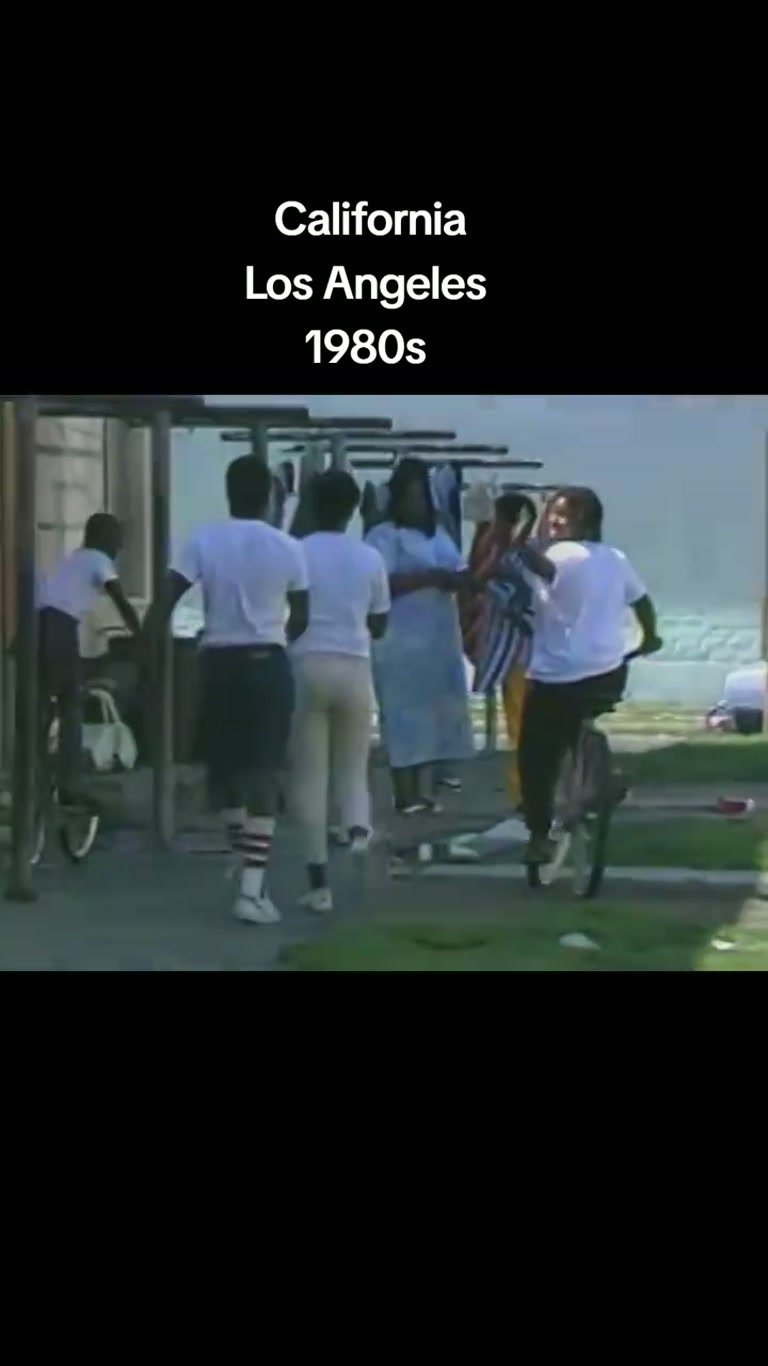
Long before doorbell cameras and phone screens, an afternoon in Los Angeles meant youngsters on a sidewalk in white t-shirts, a chain-link fence, and one yellow car parked in the sun. This slice of 1980s California takes you right back to that flat, bright light. Nothing much is happening, and somehow that's the entire point.
Just Youth on the Sidewalk
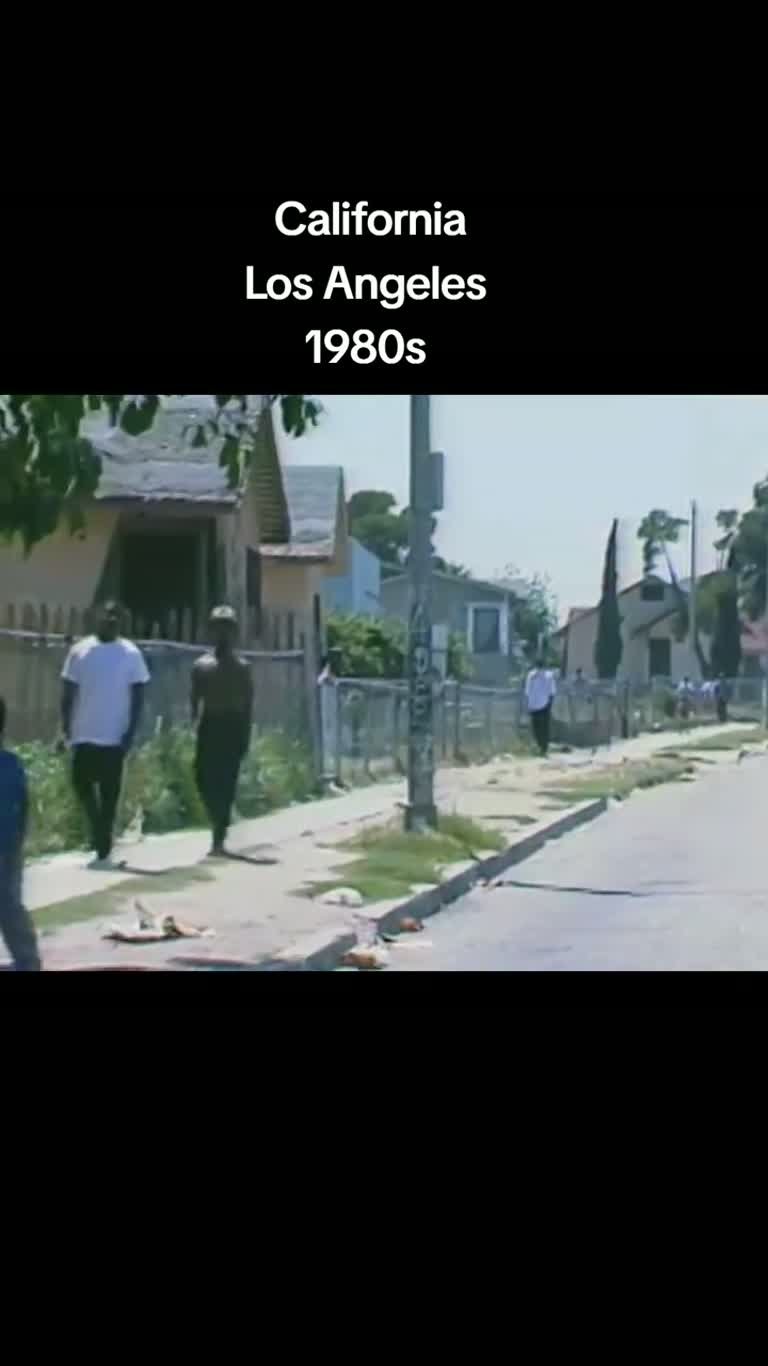
A few boys walk the sidewalk in white tees and dark jeans, hands loose, no particular place to go. Behind them, someone stands near the fence, and further down the block another group has already claimed the shade. It's the kind of scene every neighborhood had: somebody leaning, somebody talking, somebody waiting for the day to get interesting.
Nobody is looking down at anything. They're looking at each other, arms crossed, weight on one hip, that easy stance youngsters used to take when a conversation ran long. Later, a handful of them jog past with backpacks bouncing, and one youngster drops down onto the curb like it was a chair built just for him.
That's the part that hits different now. A corner, a curb, a fence — that was the whole hangout. You didn't need a plan or a reservation, just a spot and whoever happened to show up.
Fences, Lawns and Stucco Houses
The blocks are pure 1980s California: single-story stucco homes, patchy front lawns, and chain-link almost everywhere you look. On one low wall, spray-painted writing runs across the plaster, faded by sun and half-lost in the shadow of a tree. A pale two-story building with dark trim sits back from the street, its windows shaded against the afternoon heat.
Small things fill the frame, and each one feels like a little time capsule:
- Chain-link fences and metal gates, the unofficial front door of the block
- Pale stucco houses with small windows and simple yards
- A yellow car parked at the curb beside a wide green lawn
- A truck rolling down a residential street while nobody hurries
You don't see this anymore, at least not in quite the same way. Even the trim of daily life — a sign bolted to a post, a door propped open, people standing in the open air because the weather asked them to — carries a weight photos from that decade always seem to have.
The graffiti on the wall isn't really the point. It's the wall, the fence, the gate, and everything that happened around them on a regular Tuesday.
Filmed From the Window
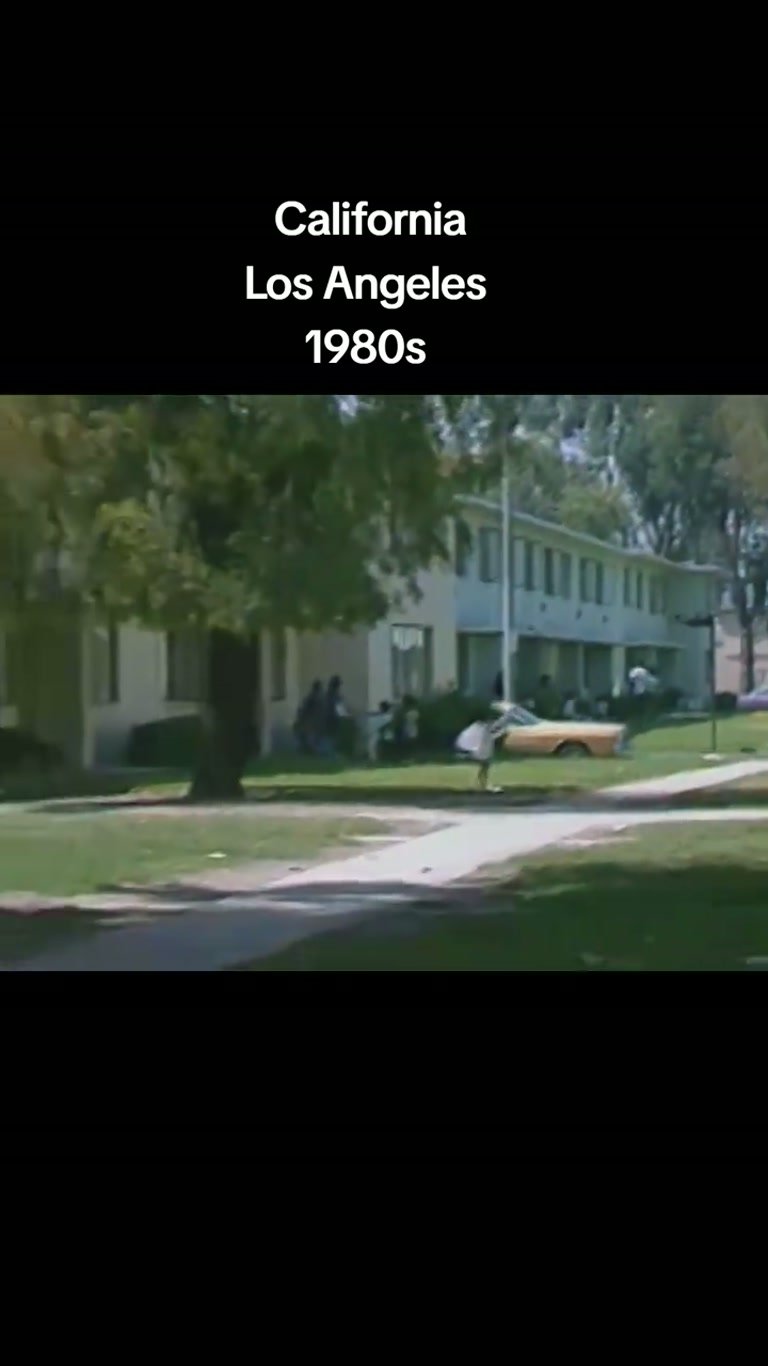
A few of the shots are framed through a window, dark edges pressing in on both sides, as if someone stood inside and watched the street instead of stepping out into it. That slight blur and washed-out color is exactly how so much home footage from that era looked: bright sun, thin shadows, colors leaning warm and soft.
And the street keeps moving underneath it all. People cross the sidewalk, someone pauses near a wall with a sack and a stick beside him, youngsters drift down the block in a loose group. No story, no narration — just a neighborhood being a neighborhood.
Why It Takes You Right Back
Maybe because a 1980s street worked like a public living room. youngsters stayed outside until the light changed, adults stood around talking, and if you wanted to find somebody, you walked over and knocked. Today's youngsters will never know the specific boredom of a summer afternoon with nothing to do but roam three blocks in every direction.
The clothes, honestly, haven't changed much. White t-shirts, jeans, a plaid shirt over a long-sleeve tee — you could spot the same outfit on any street today. What changed is the setting around it: open pavement, open time, and a whole block of people who knew your name.
That sign-off might be the most 1980s line of all — polite, brief, and assuming you'd be back next time. If this era was yours, one look at these sidewalks and you're ten years old again, squinting into California sun.
So what did your own street look like back then — and was there a corner, a curb, or a fence where everybody always ended up?
This story was edited from a publicly posted video; some details may not be independently verified.