Long before anyone had a screen in their pocket, entertainment was something you shared. Back in the 1980s and 1990s, one television set or one stretched white sheet could pull an entire street together, and those ordinary evenings are exactly why they still stay with us.
One Screen, a Whole Crowd
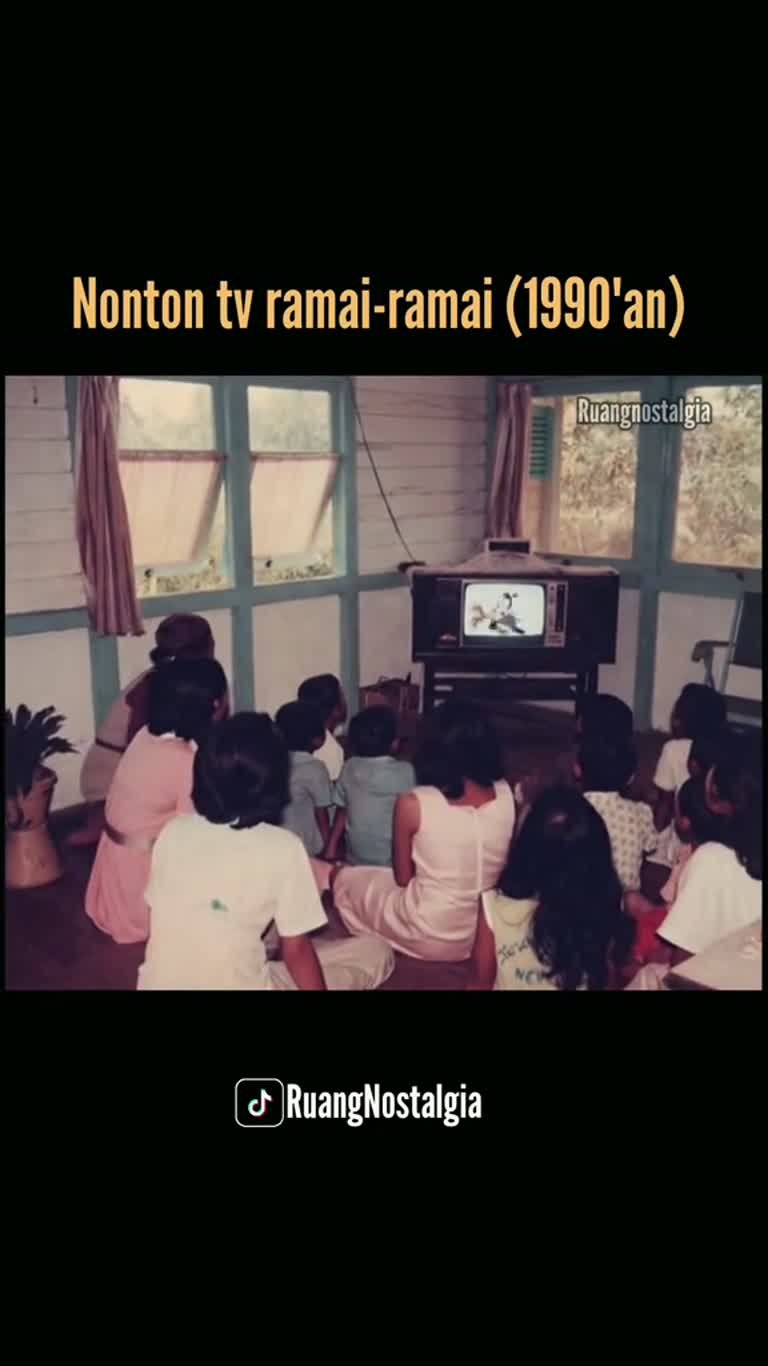
In the 1990s, students in school clothes sat on the floor of a wooden-walled room, all facing the same small television. Nobody held a remote. Nobody watched something different in another room. The only things in the picture were a row of backs and a glowing screen.
The evening version of the same idea happened outdoors, where a crowd settled on the ground in the dark to watch a film projected onto a big screen. That was the open-air movie night — no seats, no tickets, just a wall of faces looking up at the same story.
If you grew up back then, you remember how one screen could turn neighbors into an audience. You don't see this anymore, and that is part of why it feels so warm now.
The settings come with years attached, as if each memory needed a timestamp — 1970s, 1980s, 1990s, one after another. Simple curtains, wooden walls, a small set on its stand. Fewer choices made the evening simpler: one screen, everyone in the same room.
The Corner Shop and the Drink Cart
A roadside food stall shows up with a Coca-Cola sign above the counter, bottles of 7Up lined up on a green cloth, jars of drinks and plates of snacks. A woman stands behind the table, waiting for whoever walks up next.
Then there is the handwritten menu, held up like a little trophy:
- White rice — Rp 150
- Chicken soup and tripe soup — Rp 350
- Meatball soup, ketoprak and gado-gado — Rp 250
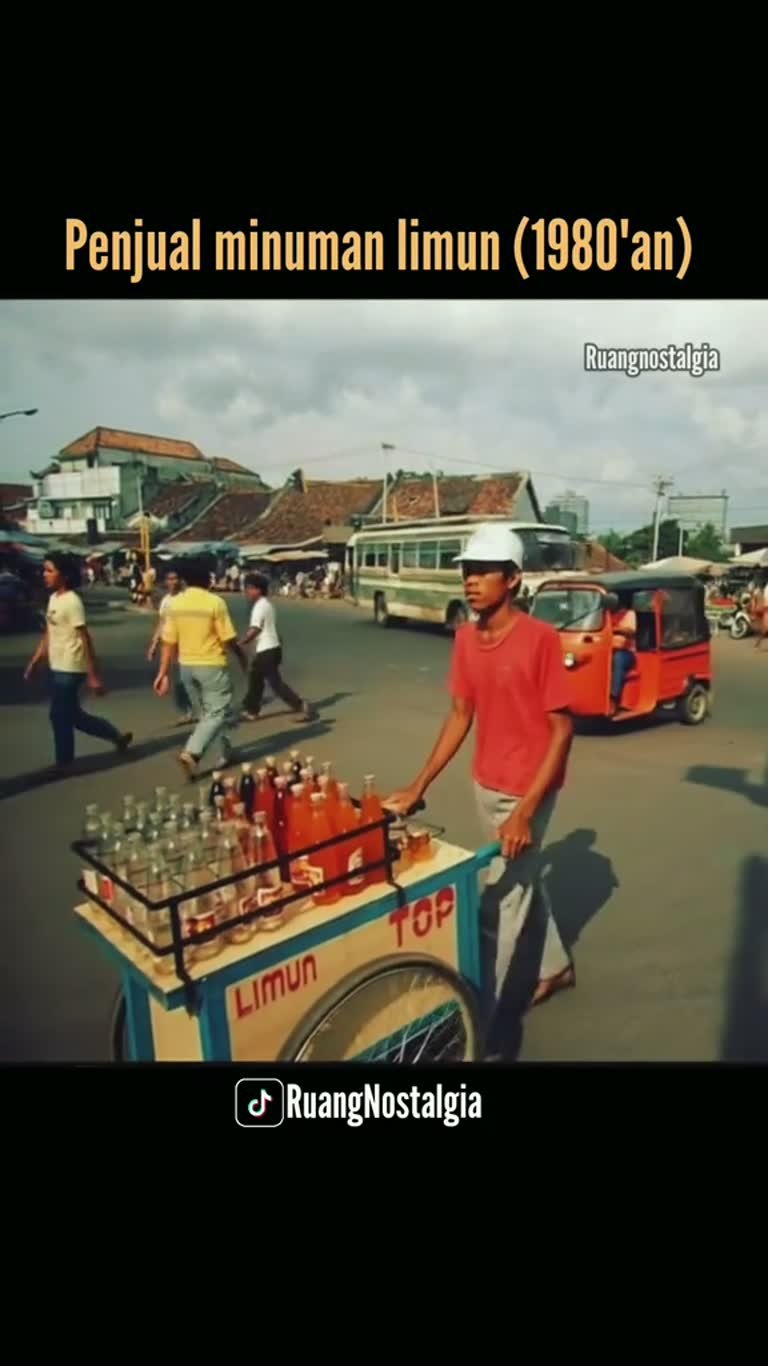
Elsewhere, a drink seller pushes a cart of glass bottles through a busy street, wearing a red shirt and a white cap, a lime drink painted on the side of his cart. One person, one cart, an entire daily route, with a bus and a rickshaw passing behind him.
Everything on that cart fits in one frame: bottles, a cold box, a painted sign, and the man who runs it. That was the whole business, and it moved at walking speed.
Tapes, Photos and Handwritten Prices
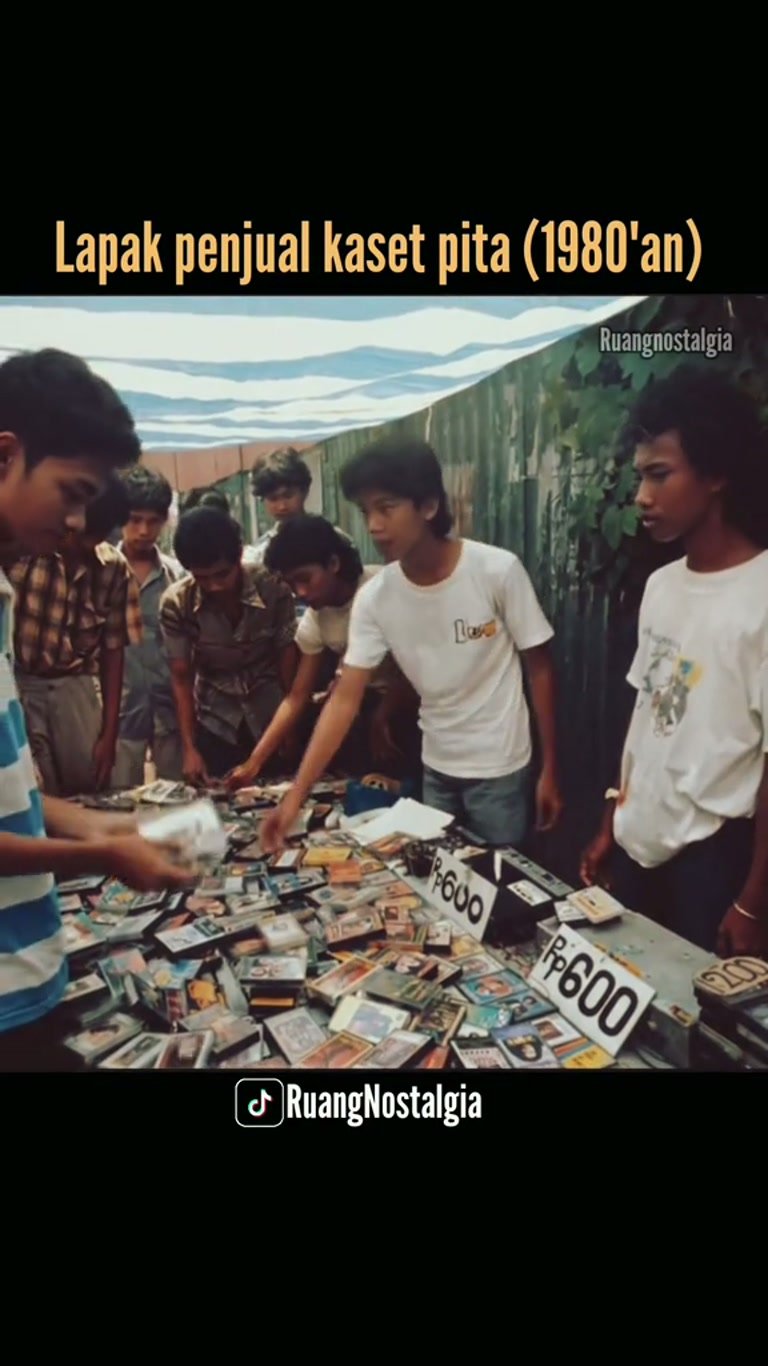
Buying music in the 1980s meant standing at a table covered with cassette tapes, leaning in beside a few strangers, and checking the price sign: Rp 600 a tape. There was no search bar and no skipping ahead. You picked one, paid, and hoped.
There is something about standing at a table of tapes that forces patience, and patience is exactly what this era was built on.
Nearby sits another kind of small business: a photo cart covered with framed portraits and sample prints, its owner resting beside it. Getting a photograph developed was a real errand — walk it over, wait, come back.
The Sound Crew and the Bus
At a celebration in the 1990s, three young men worked the sound equipment: amplifiers and speakers stacked on a table, woven bamboo panels behind them, bulbs strung overhead. No stage lights, no giant screens — just a table, a few cables, and a job that had to be done right.
The streets had their own cast, too. A blue and white double-decker bus paused so passengers could climb aboard, one traveler already standing in the open doorway while others watched from the windows.
Down the block sat a small wooden shop packed with drinks and goods, its owner on a stool outside with something to read in his hands. Hard to explain to younger generations why a table full of tapes or a cart of drinks could be the highlight of a week.
The language on the signs changes from place to place, but the feeling is the same one you had growing up: glass bottles in a cart, prices in careful handwriting, and a whole room watching the same thing at the same time.
Which one was part of your childhood — the tape stall, the drink cart, or crowding around one screen with everyone you knew?
According to RuangNostalgia. This story was edited from a publicly posted video; some details may not be independently verified.