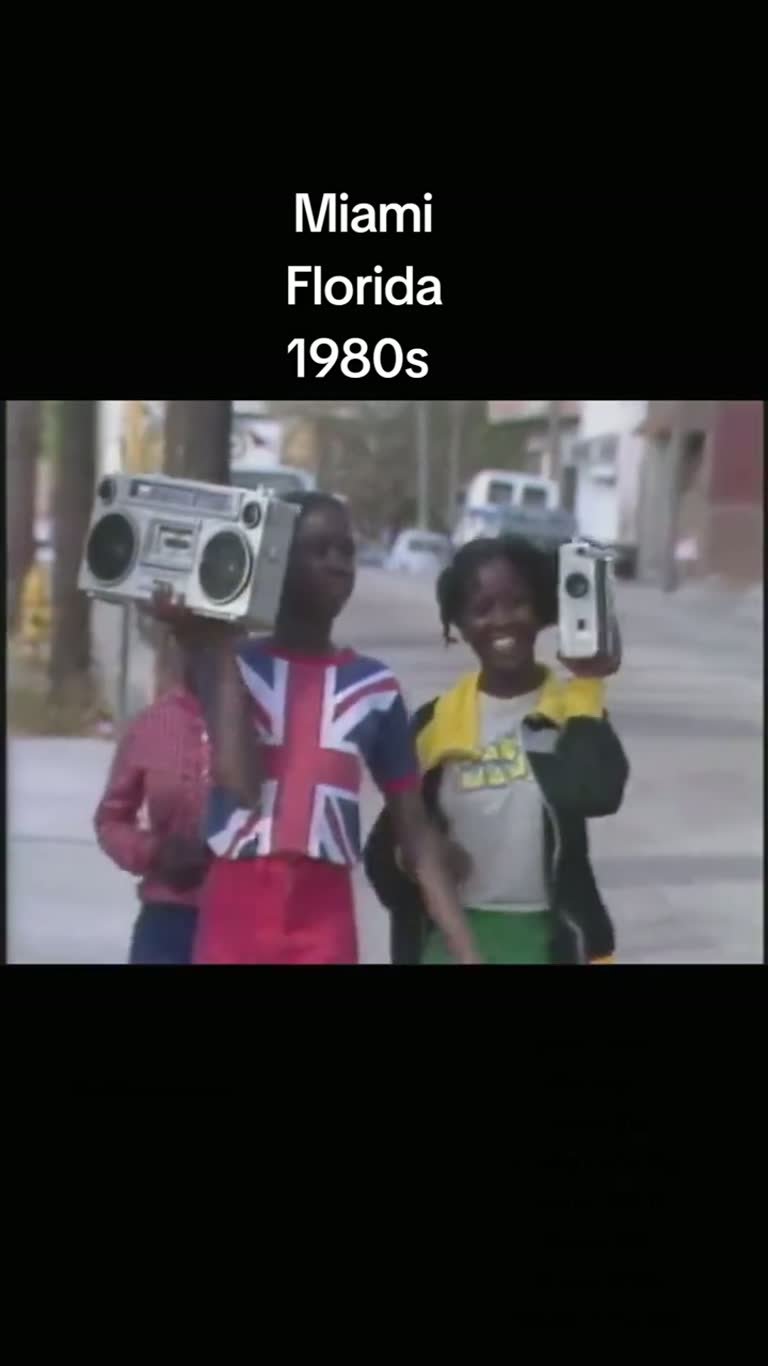
Long before anyone carried a phone in a pocket, the soundtrack of a neighborhood came out of a box balanced on somebody's shoulder. On the sidewalks of Miami, Florida in the 1980s, youths in bright track jackets walked with boomboxes held high, and nobody thought it looked strange. For anyone who grew up back then, this takes you right back.
Boomboxes Held High on the Block
The first thing you notice is the boombox — silver, boxy, and raised overhead like a trophy. one youngster stands with friends in yellow and black track jackets, and another has a shirt covered in the Union Jack. A third wears bright pink and stands easy, like the sidewalk belonged to them.
Then the singing starts. A boy balances the radio on his shoulder, head tipped back, mouth wide open, while the others walk ahead. Arms out, steps loose — the sidewalk was the stage, and the block was the audience.
Bright colors were the whole point, too. Track jackets zipped to the collar, graphic tees, sneakers, and hair styled with real care. Everyone had a look back then, and the look was loud.
That was how music moved in the 80s. No earbuds, no playlists, no headphones to untangle — just one box loud enough for everyone nearby. You don't see this anymore, and yet somehow the whole street always knew the same songs.
Youth, Bikes and the Corner Store
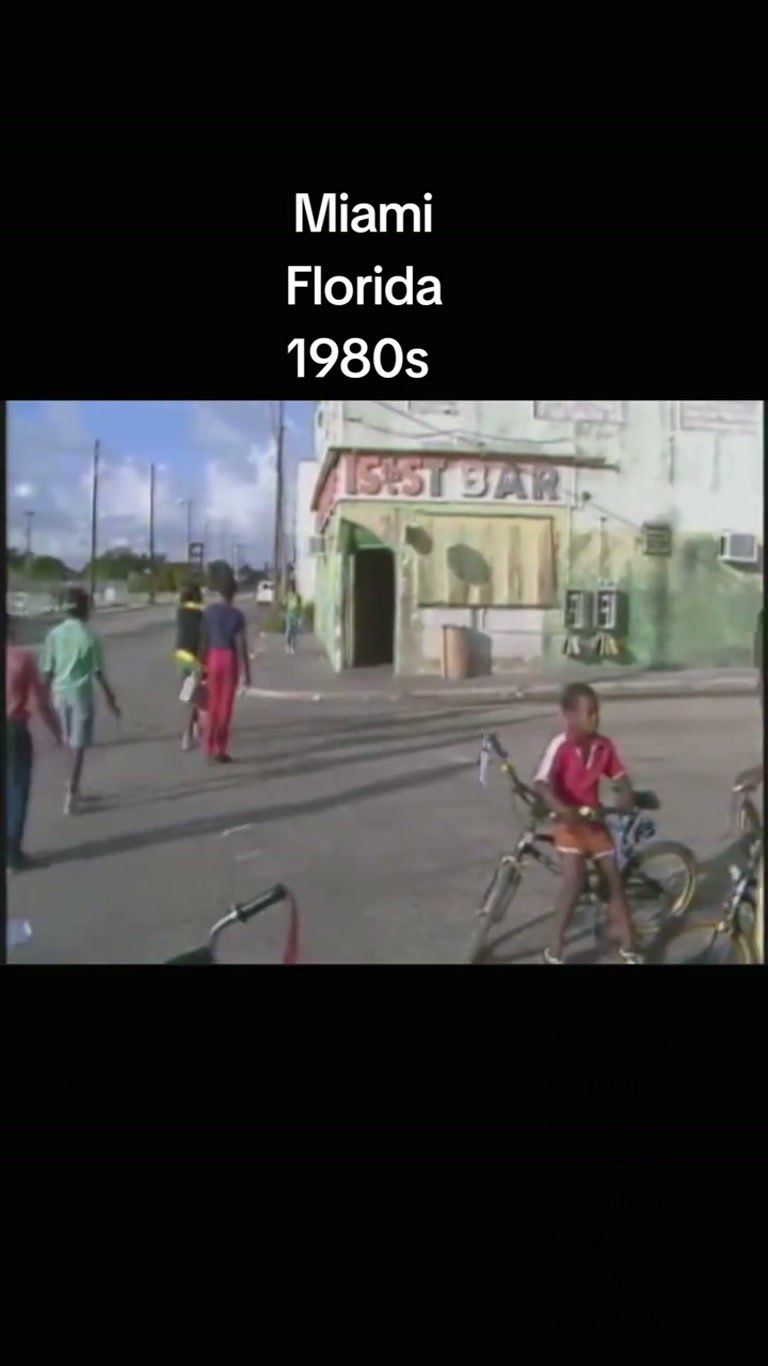
Turn the corner and the neighborhood keeps moving. A man in a patterned shirt and loose blue pants walks past a low building while a bicycle crosses the street behind him.
Down the block, two men in light button-up shirts stand outside a storefront, one in a cap, talking the way neighbors did when nobody was in a hurry. youngsters on bicycles cluster near a green corner building with a bar sign, a few in pink shirts pedaling slowly toward the road.
The parked cars were small and boxy, the buildings low, the street wide and open. Nothing about the scene was rushed, and nobody seemed to be watching a clock.
A crosswalk barrier rests on the sidewalk near a yellow fire hydrant, and a woman in a short dress stands talking with a police officer at the curb. Everyday traffic, everyday faces. If you grew up back then, you remember a street that looked almost exactly like this one.
A Payphone on the Corner
A woman in a floral skirt and headwrap stands at a payphone, one hand near the receiver, with a small red car and a white one parked behind her. That booth was a landmark — where you called home, and where you waited when somebody was late.
Hard to explain to younger generations how much planning a simple phone call once took. You needed coins in your pocket, a number written on your hand, and a little luck that nobody else was already using the phone.
Those were simpler days, and the booth usually sat right where the sidewalk met the street, catching the afternoon sun while the block carried on behind you.
Arcade Lights and Striped Floors
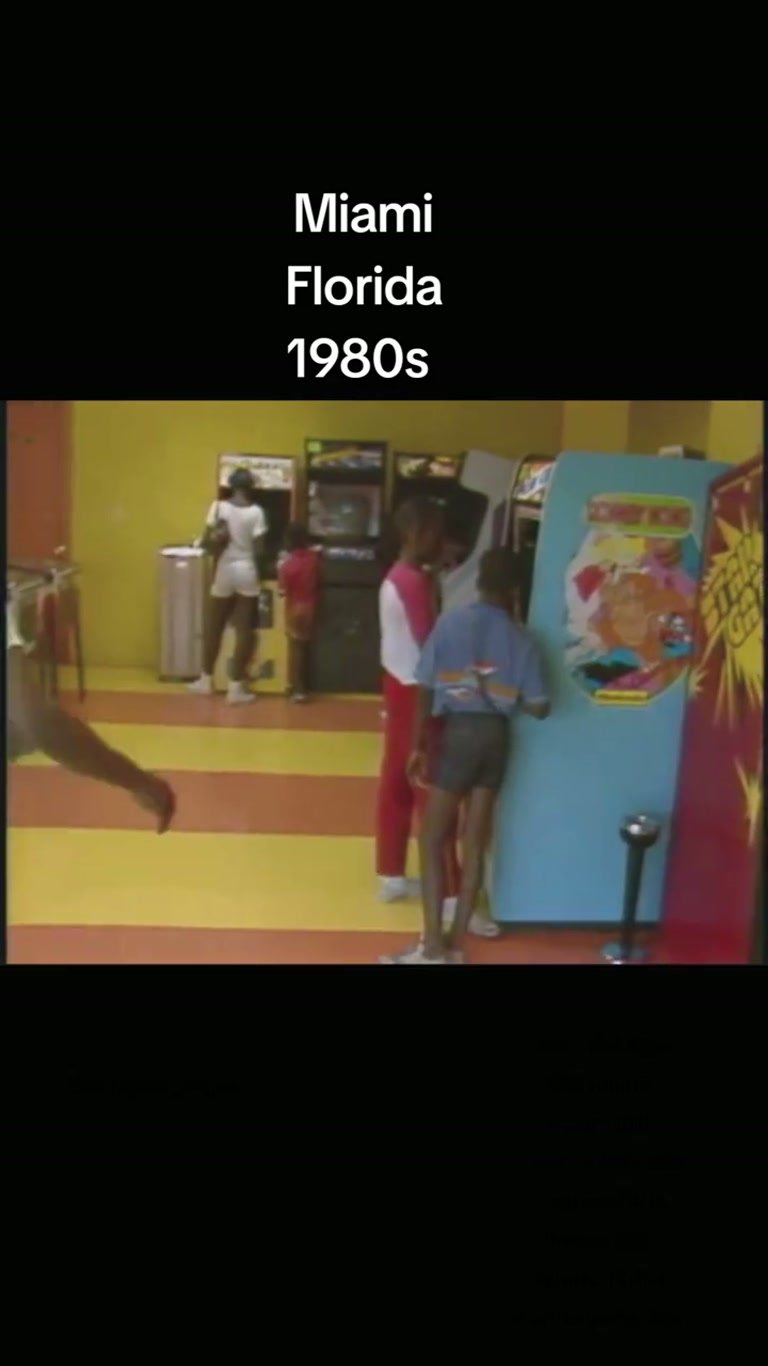
Inside, the floor is painted in wide yellow and red stripes, and the cabinets glow along the walls. youngsters lean into the machines, one in a pink shirt fixed on a screen full of blue blocks while friends crowd in behind to watch.
No home console, no online matches — if you wanted to see the next level, you went where the machines were. A few quarters could buy a whole afternoon, and the walk home always felt slower than the walk there.
Outside, the sun was still up and the block was still busy. People wandered in and out of the door, and the striped floor kept collecting sneakers until it was time to go home.
Some details in clips like this are hard to confirm, so a few small things may not be independently verified.
What do you miss most about the streets where you grew up — the boombox on the corner, the payphone that always had a line, or the arcade with the striped floor?
This story was edited from a publicly posted video; some details may not be independently verified.