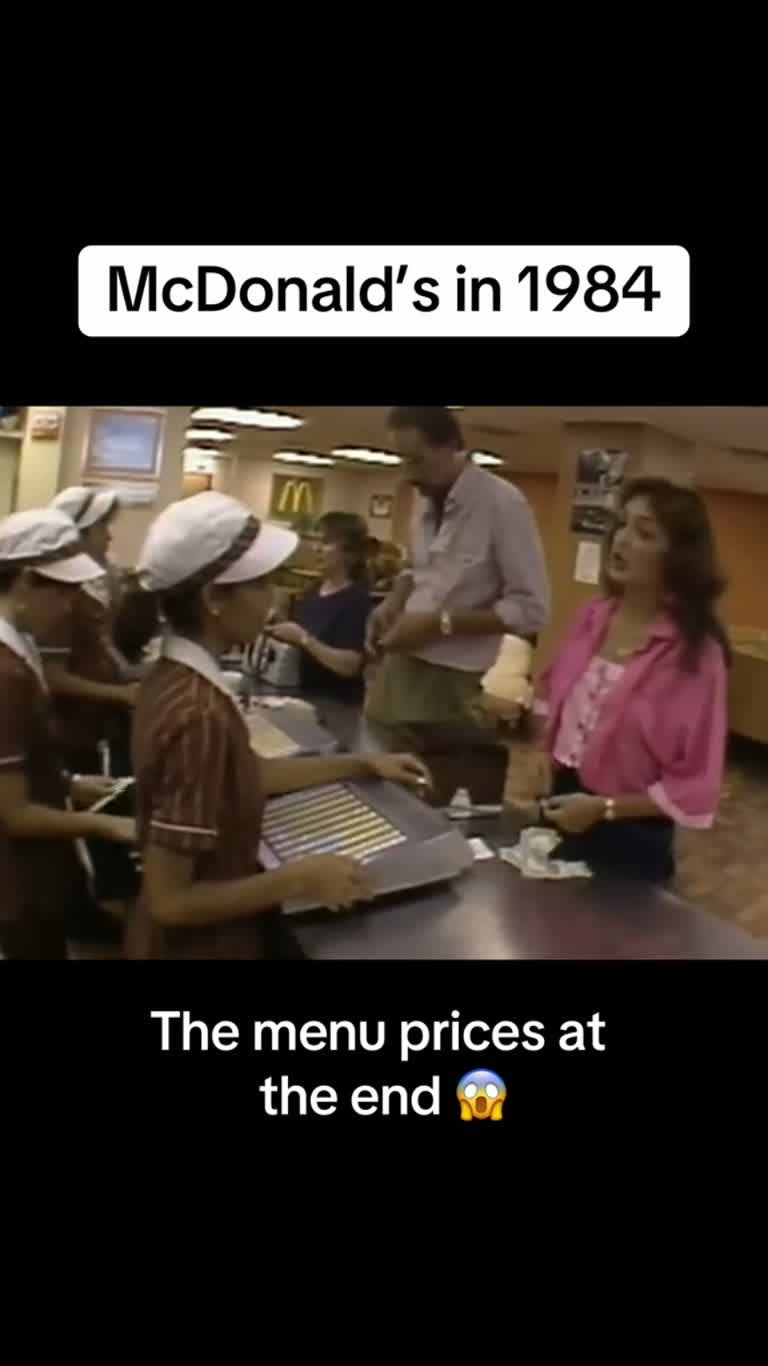
It's 1984, the dining room is trimmed in orange and brown, and a worker in a striped uniform is sliding a tray across the counter. Then your eyes drift up to the menu board, and that's where the real throwback hits. The food looks familiar — but the numbers next to it belong to another world.
Walking Up to the Counter
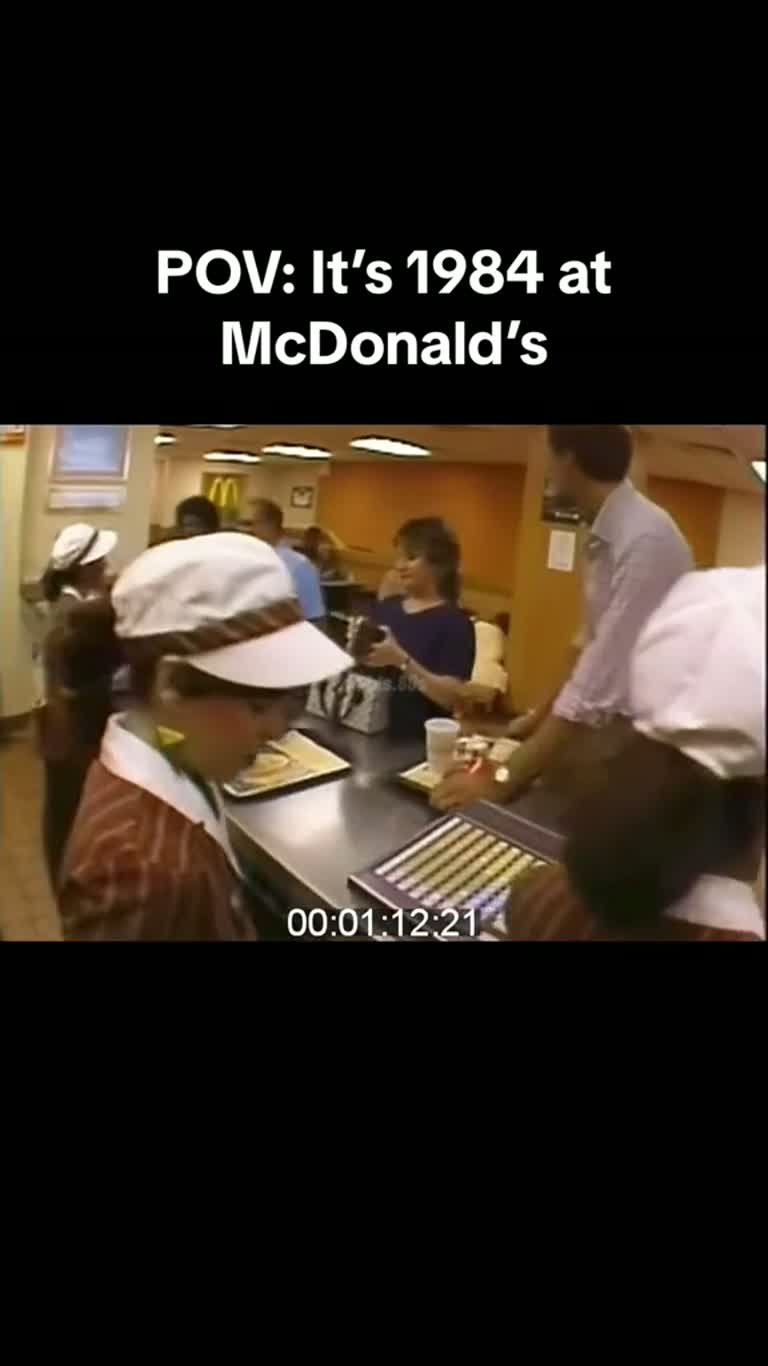
The first view is the front line: an employee in a white cap and a brown-and-white striped shirt, leaning over a register with a paper-lined tray in front of her. Customers stand on the other side in everyday clothes, waiting their turn with cash in hand. No kiosks, no app, no glowing screen overhead — just a person, a register and a line that moved when it moved.
The whole look of the place is a giveaway. Warm wood tones, trays stacked and ready, and a counter built for a lunch rush. Things were different back then, and this little scene says it all.
There's something about that crew uniform that takes you right back — the visor, the apron, the way the staff worked shoulder to shoulder when the line got long. It's a detail that shows up in old photographs and almost nowhere else.
The Menu Board Tells the Story
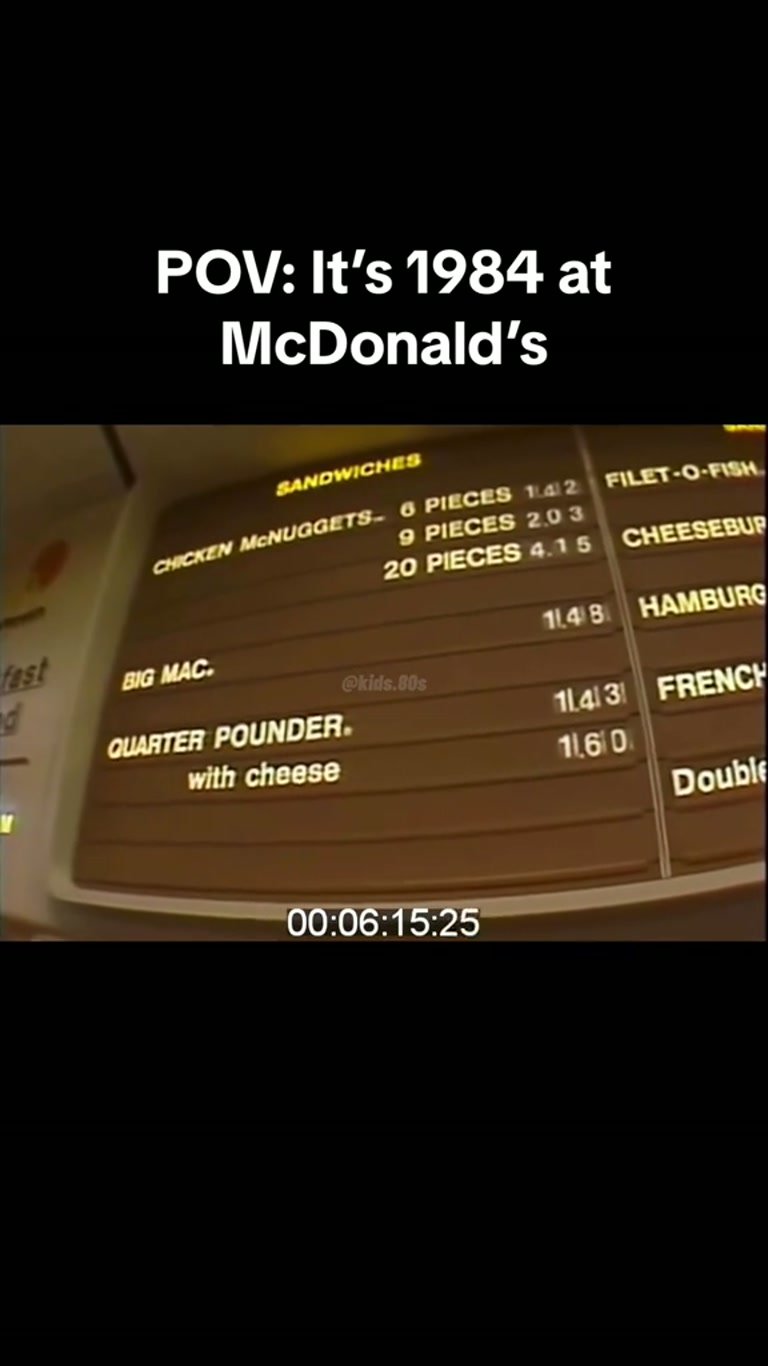
Then the camera lands on the board, and the prices do the talking. A hamburger sits at 60 cents, a cheeseburger at 75 cents, and an order of fries at 57 cents. The Big Mac and the Quarter Pounder with cheese land around a dollar and change, and a Double Cheeseburger tops out near a dollar fifty.
Chicken McNuggets come in three sizes, from six pieces up to a 20-piece box, with the Filet-O-Fish listed right beside them. Almost everything on the board is under two dollars, which is exactly why this kind of clip gets passed around again and again.
The breakfast side is up there too — Egg McMuffins, hash browns, an English muffin with jam, a Danish. And the beverage column runs long: orange, Diet Coke, Coca-Cola and Sprite, milkshakes in vanilla, chocolate and strawberry, milk, Florida orange juice, coffee, hot apple pie, sundaes, a cone and iced tea. It reads like a list of small, ordinary choices that somehow felt like a treat.
Fries, Trays and a Very Famous Burger
Behind the counter, a hand scoops hot fries into a red carton, the pile on the warmer still deep. Up on the counter, a finished tray waits with two lidded drinks, a wrapped sandwich and a yellow box — everything assembled by hand, in order, one customer at a time.
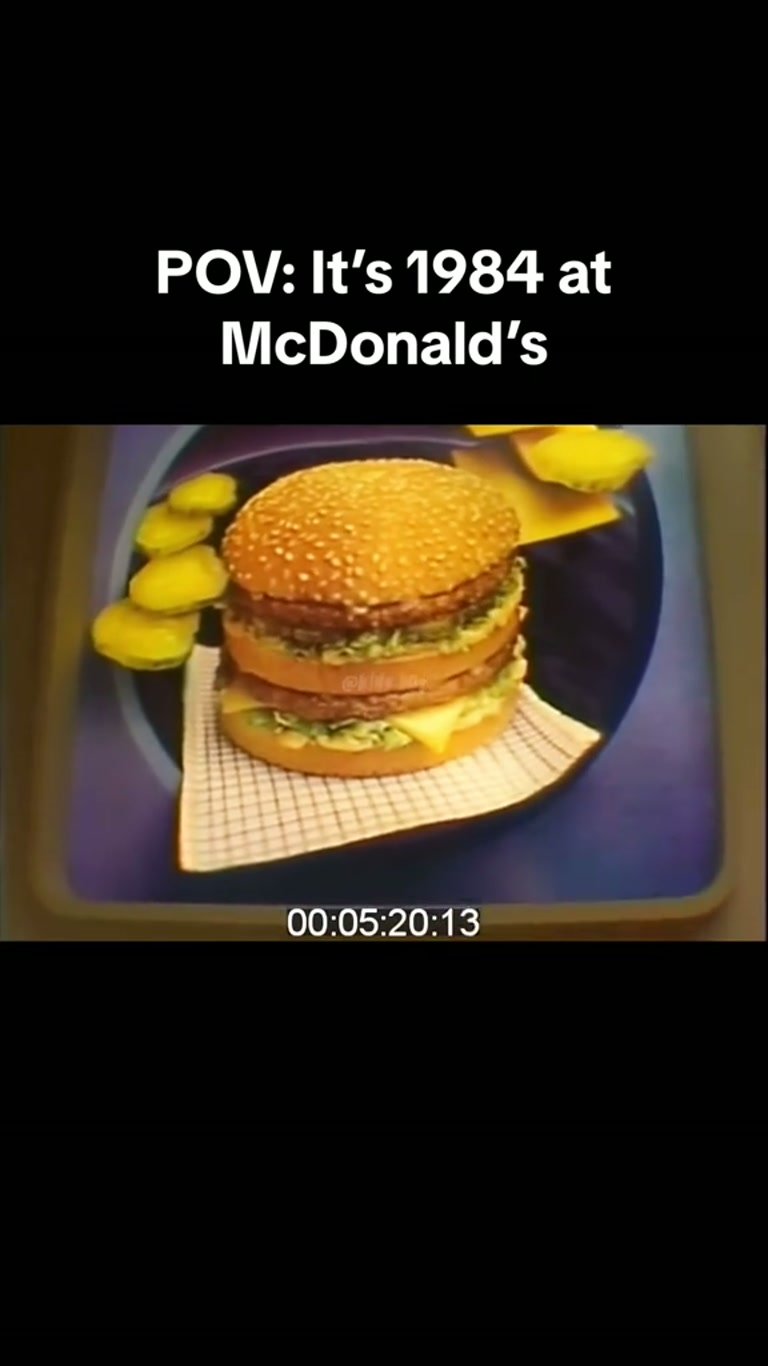
Then comes the close-up that stops people mid-scroll: a two-patty burger with melted cheese, shredded lettuce and a sesame seed bun, sitting on a paper liner with pickle slices fanned out beside it on a blue tray. They don't make them like this anymore — or maybe they do, and it's the price that has quietly disappeared.
The Dining Room Where Everyone Lingered
The last views pull back to the seats. Hanging plants, wood-grain tables, chairs with rounded backs, and tiled floors. Groups of women sit together with trays of food, talking the way people did when a fast-food dinner was also an evening out.
Youth, teenagers and adults share the room in the same shot, no phones on the table, nobody in a hurry. If you grew up back then, you remember this: the booth by the window, the paper cup, the fries you were told not to eat before the burger.
A few of the smaller numbers on these older menu boards are hard to read at this distance, so treat the finest details as a snapshot rather than a formal record.
So here's the question: what did you always order at McDonald's back in the day, and what did it cost in your town?
This story was edited from a publicly posted video; some details may not be independently verified.